



DRW50
Member
-
Joined
-
Last visited
Everything posted by DRW50
-
 I wasn't really watching by then (when I came back to the show she'd already had the baby) but I imagine they didn't delve into her post-partum past or do much with the story. It seemed like a very random choice for the character - maybe they just desperately wanted to cement her relationship with Jeffrey for viewers. I will say it's probably in character for her to be a late-in-life mother and if the show had stayed on that would have been compelling to watch...if they'd actually shown us her being a mother instead of the kid being offcamera.
 -
I forgot Diane was on Sisters. A shame she didn't stay longer as that show was perfect for her.
-
I think it was Lifetime as I watched the show in repeats again (I stopped after the first 3-4 seasons). Nice to see another fan. Another thing on Sisters I've never forgotten is the early episode where Teddy led a protest the others eventually got involved with, and she kept saying, "I don't want to take a trip on the SS Censorship."
-
If they'd told the story properly, Reva and Josh wanting to be parents again because they never got to raise Marah and Shayne properly (especially Reva) could have been interesting, particularly if Reva hadn't been able to conceive and had turned to being a foster parent or adopting a child. Reva was always heavy in story, yes. I didn't really mind because I thought Zimmer sold what she was given and never became cold the way Beth Ehlers did, but I really don't believe B&E knew what to do with her most of the time. She's at a real loss by the time they leave. That continues for a long while where things just happen to Reva (she's blind, she's stalked, she is a psychic, etc.). For as much as she disdained Ellen Wheeler, Wheeler was the one who put more of a jolt back into Reva's identity and storylines.
-
That's disgusting, although it's typical of him. I wonder why he even asked her onto the show in the first place. GL was the only show she was ever a regular on, although that may be down to others not wanting her, I don't know. She was well-liked by ATWT viewers, so if she'd wanted to stay that's always a big "what might have been" for me, although that period of ATWT was so moribund I doubt she would have had anything interesting to do if she'd stayed.
-
I'd never heard of this podcast, but Louise Shaffer has been on several times, including last month. This is on Tom Lisanti's channel, and he's also been interviewed a number of times. The Diana Montford Show with Louise Shaffer, December 3, 2025
-
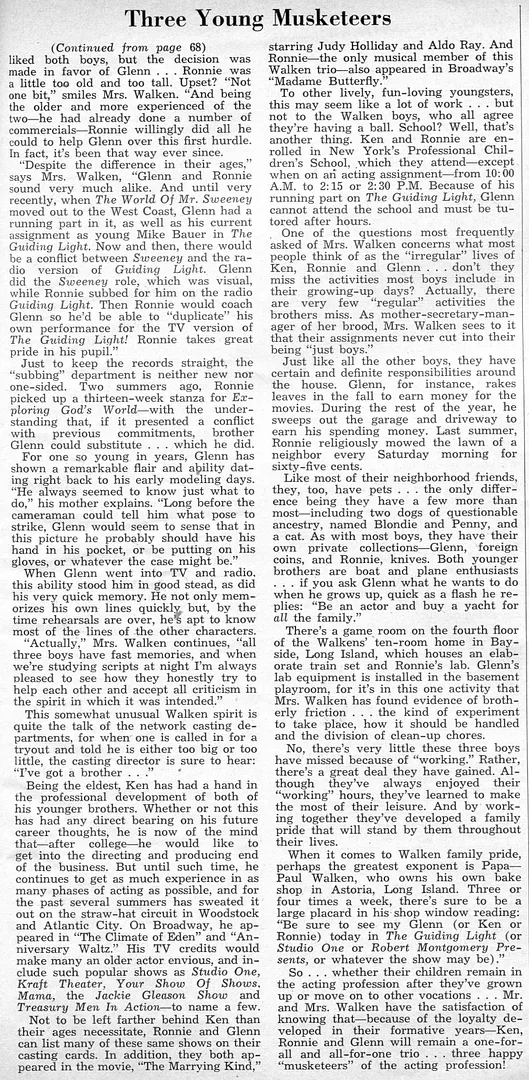
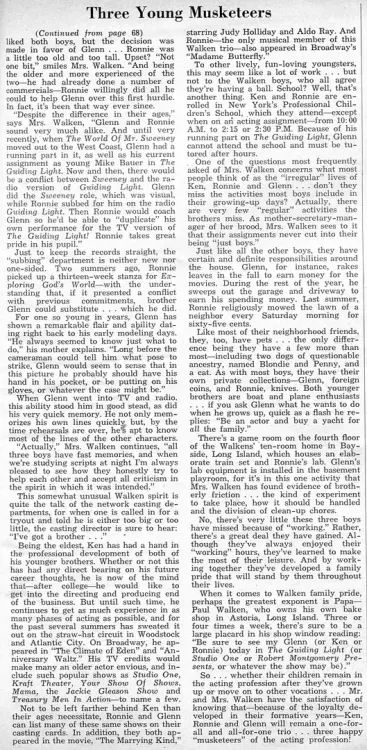
February 1956 Radio TV Mirror April 1956 Radio TV Mirror
-
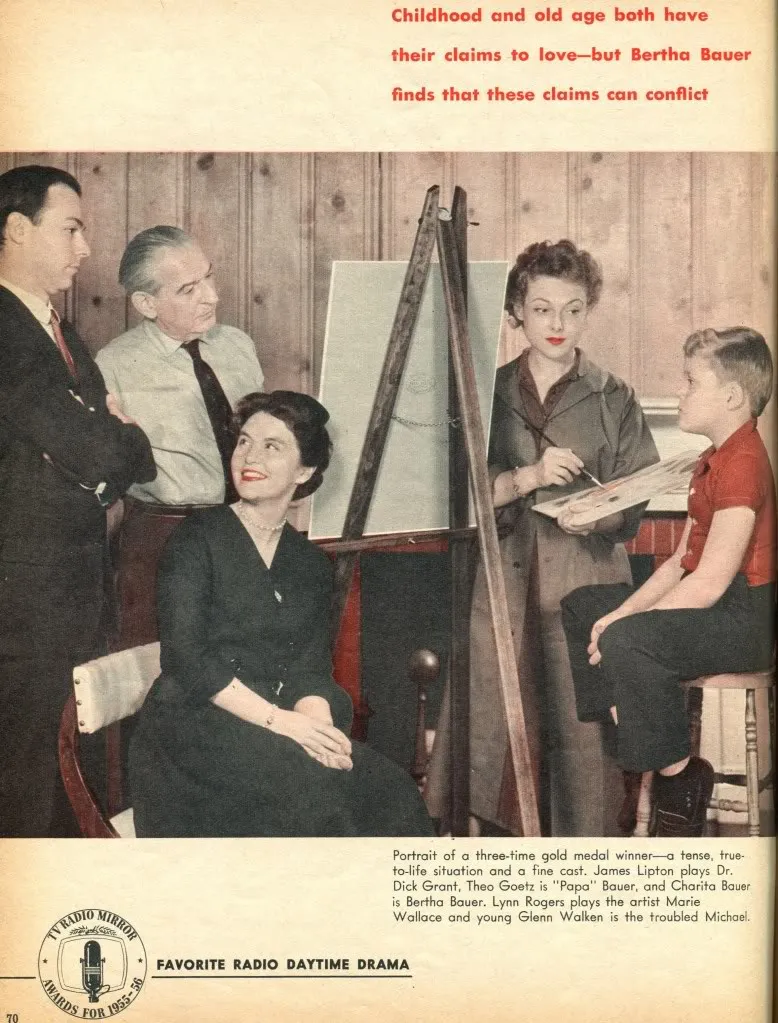
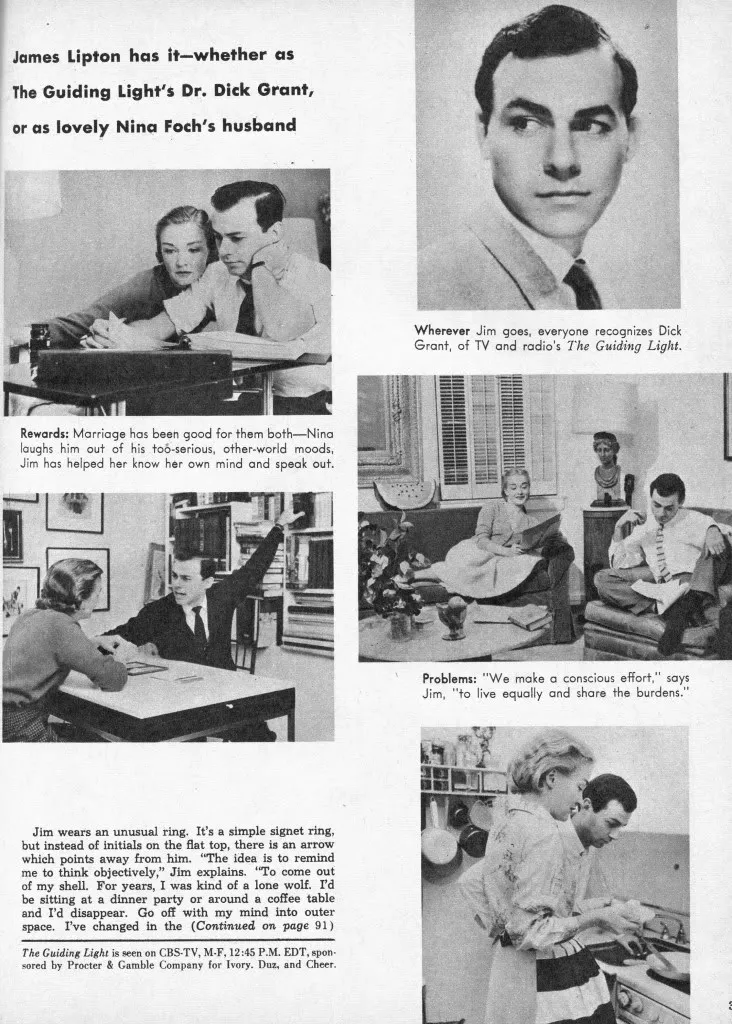
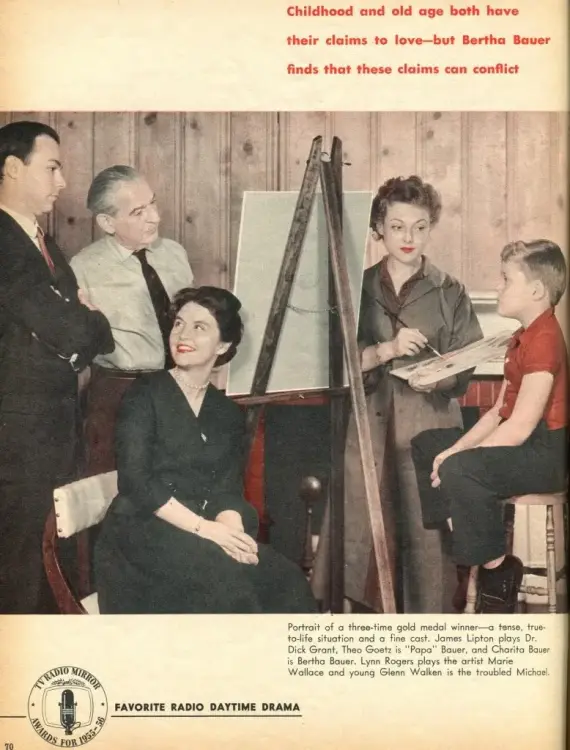
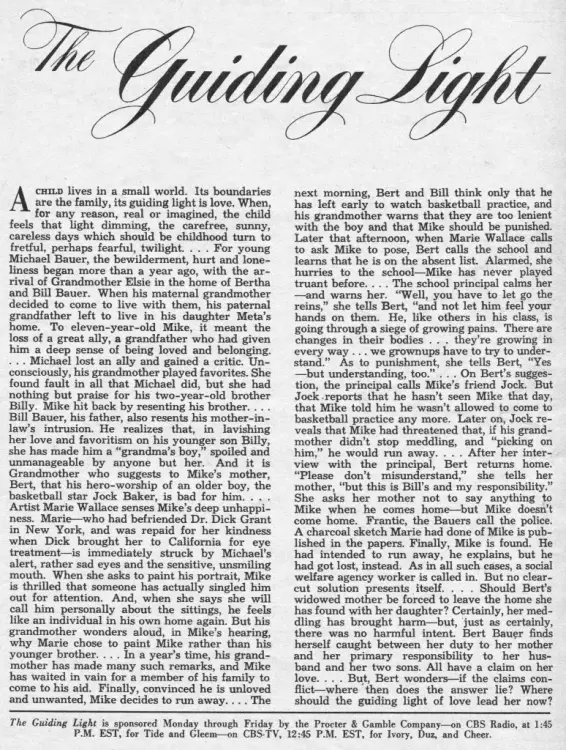
May 1956 TV Radio Mirror. This was one of their award issues. James Lipton was runner up for most popular daytime actor, radio and TV (radio was won by Sandy Becker, TV by Terry O'Sullivan).
-
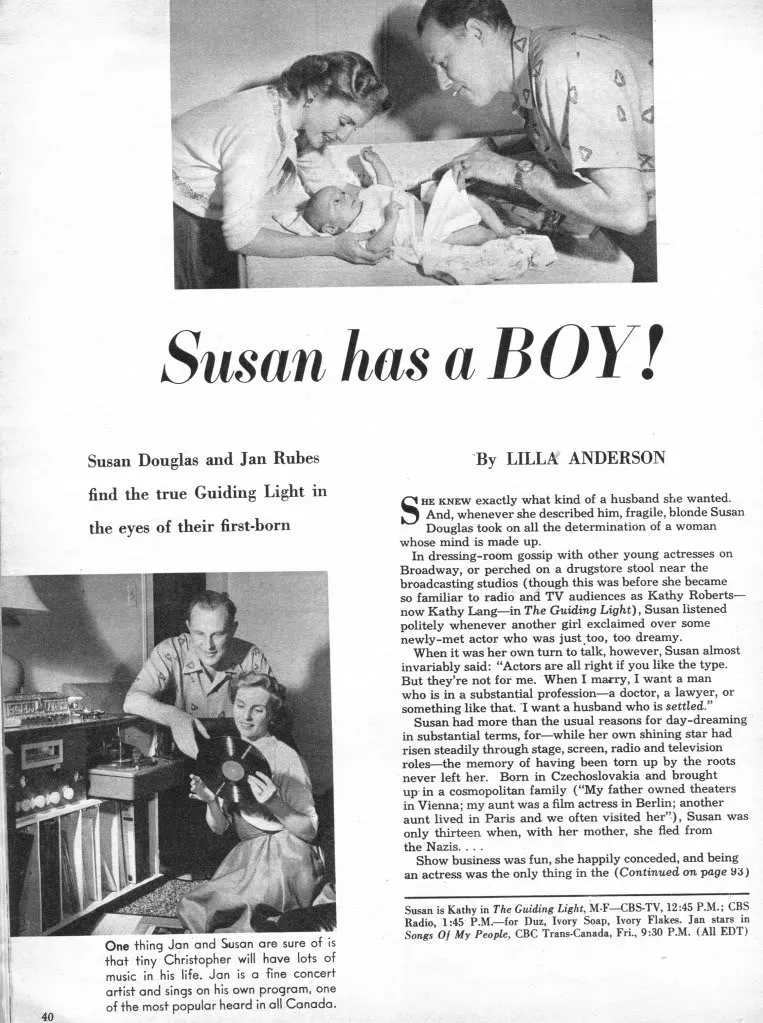
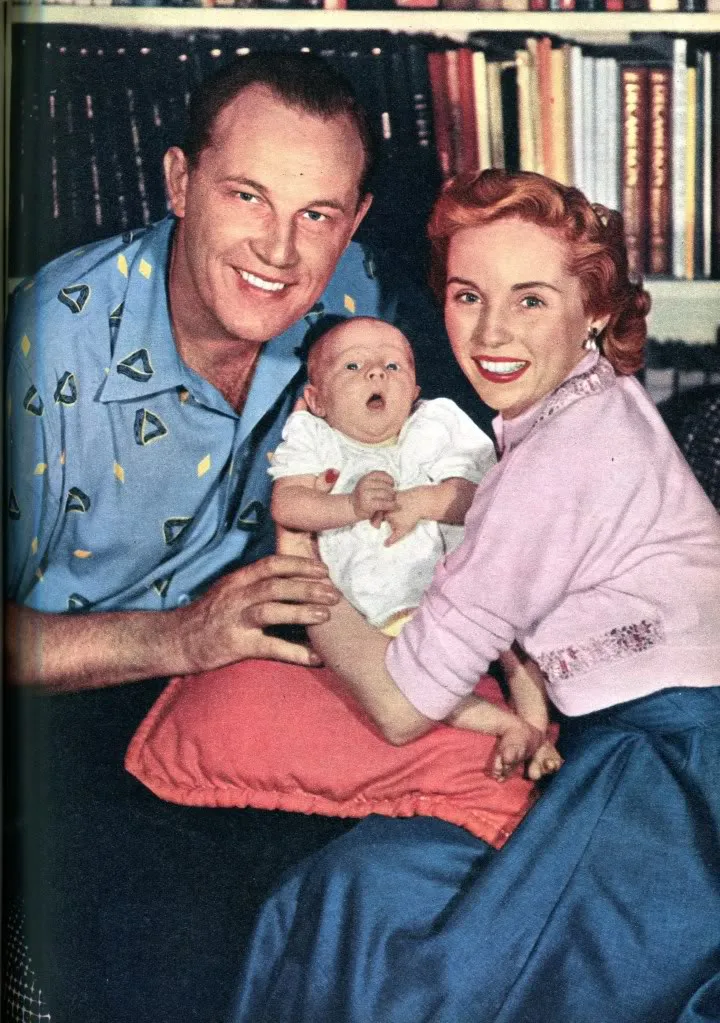
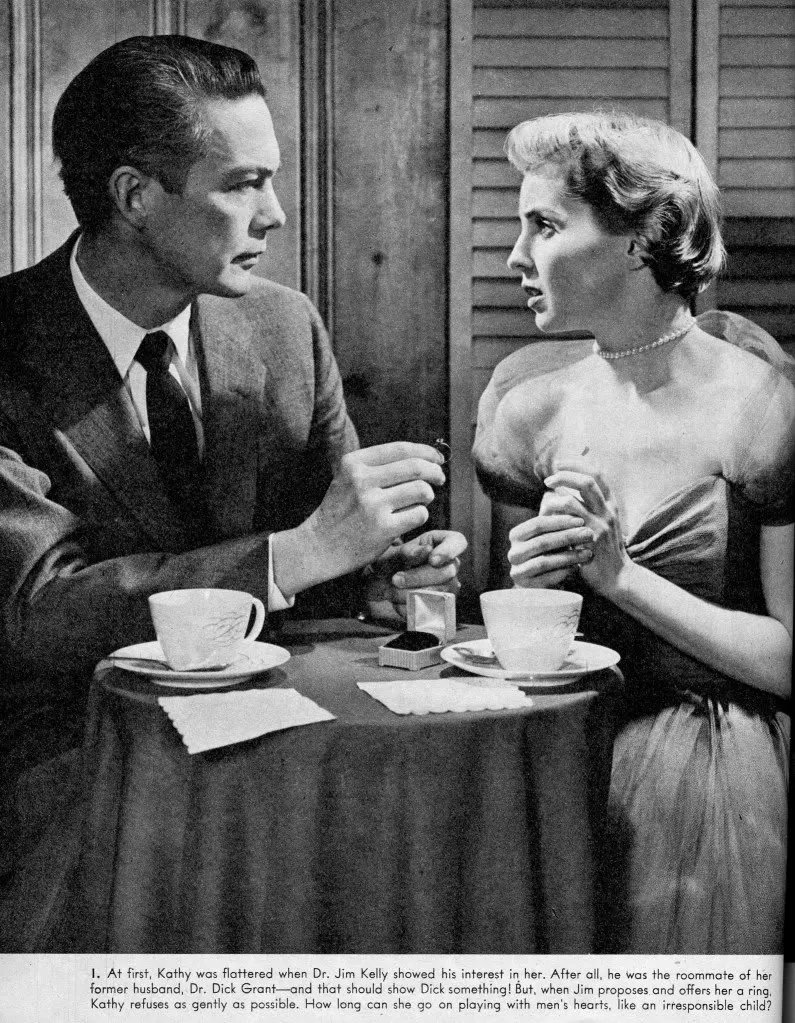
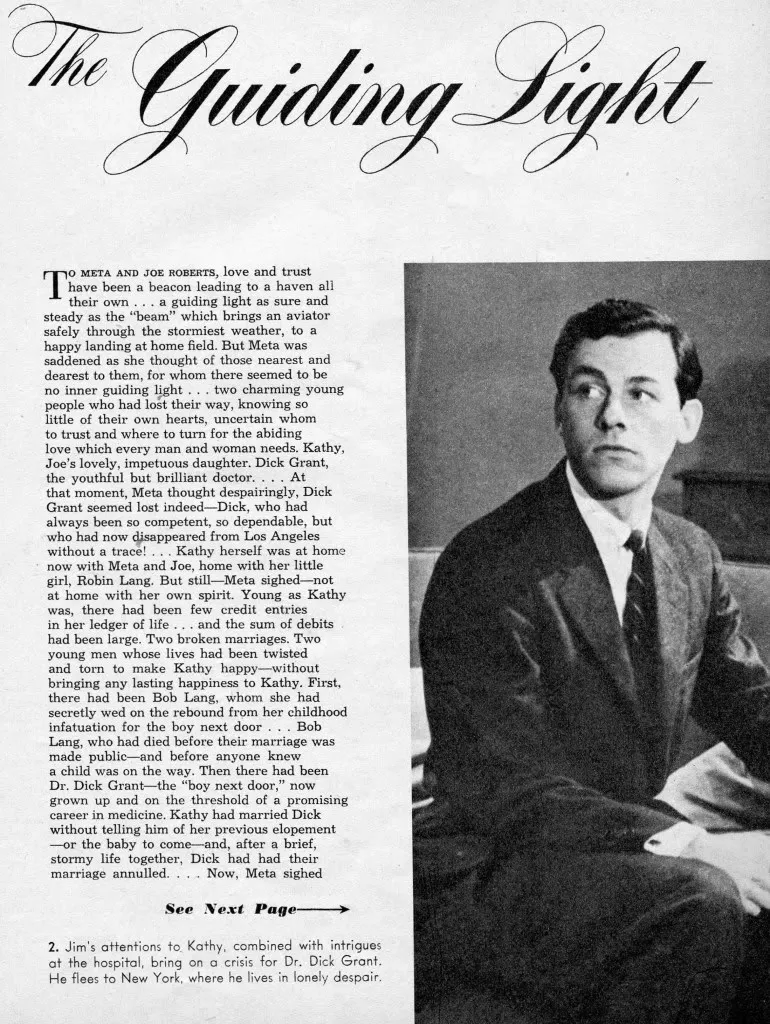
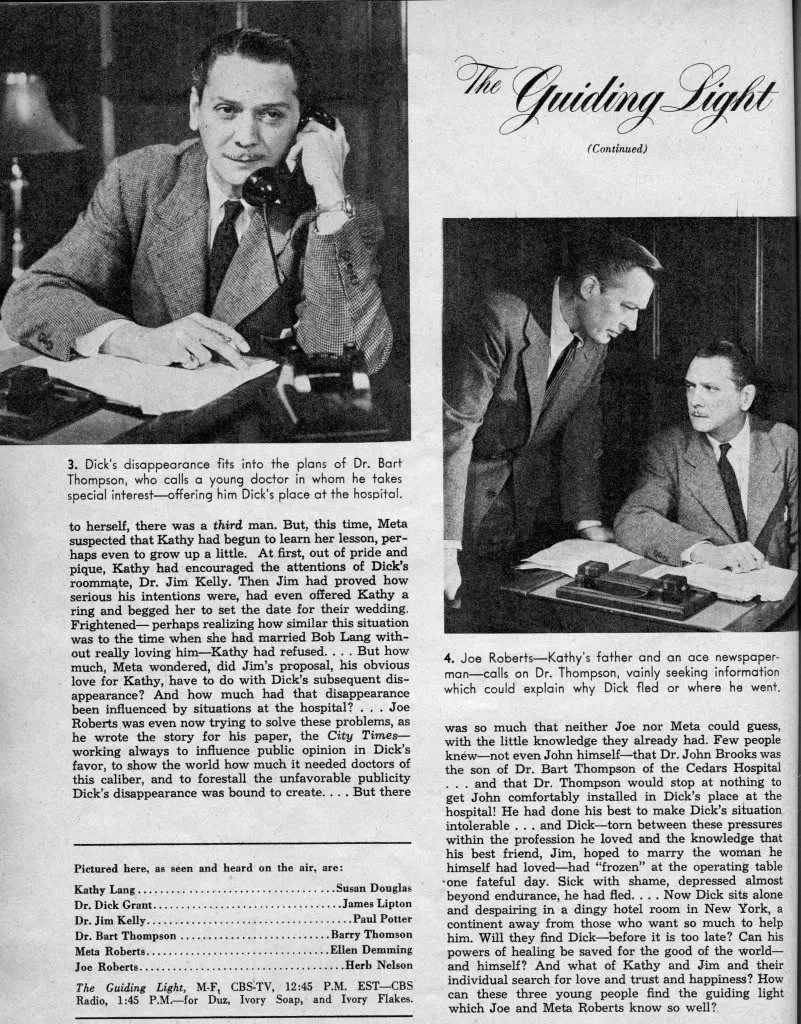
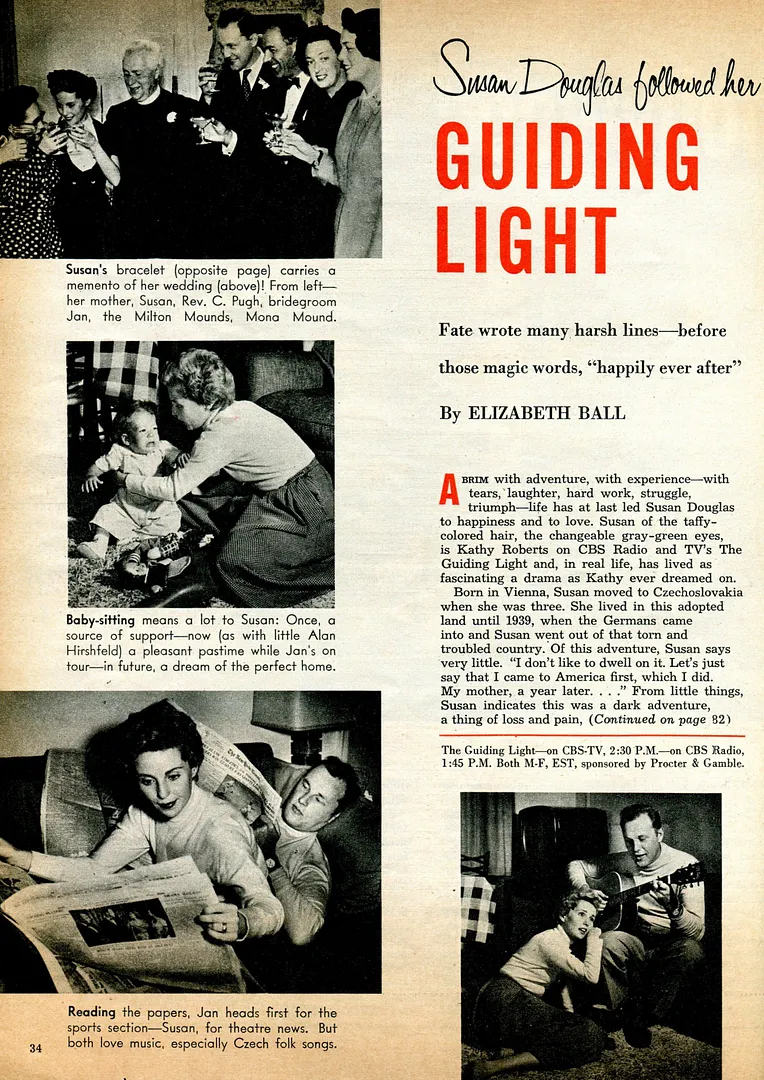
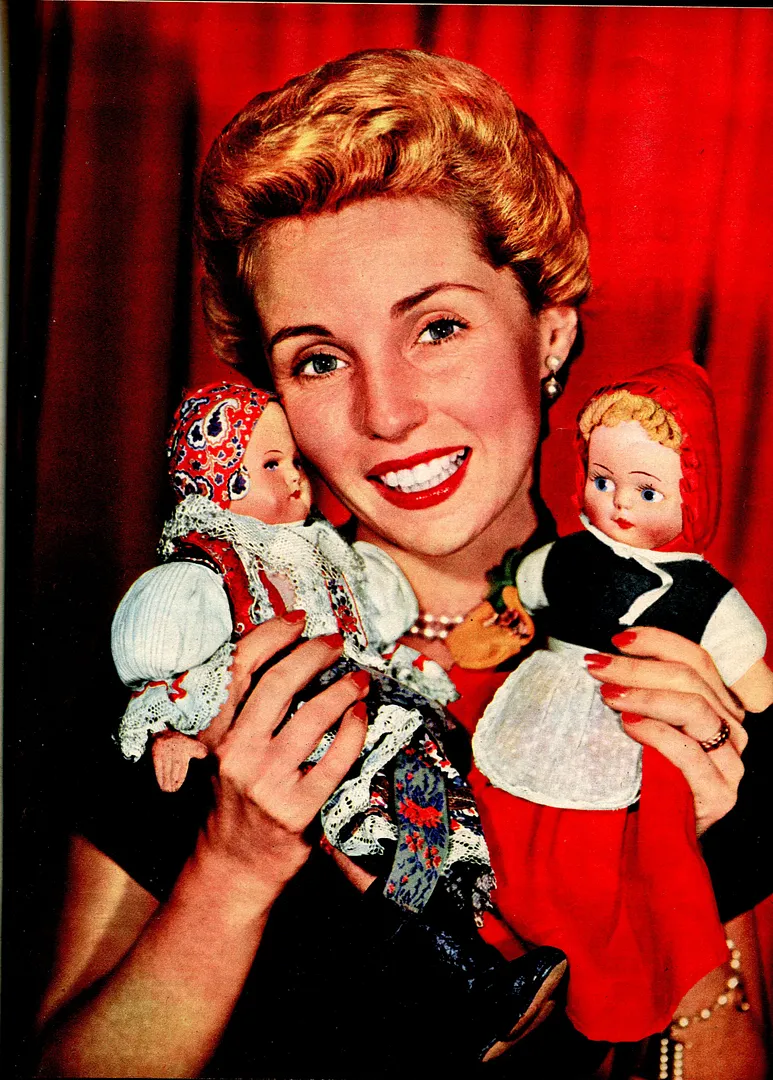
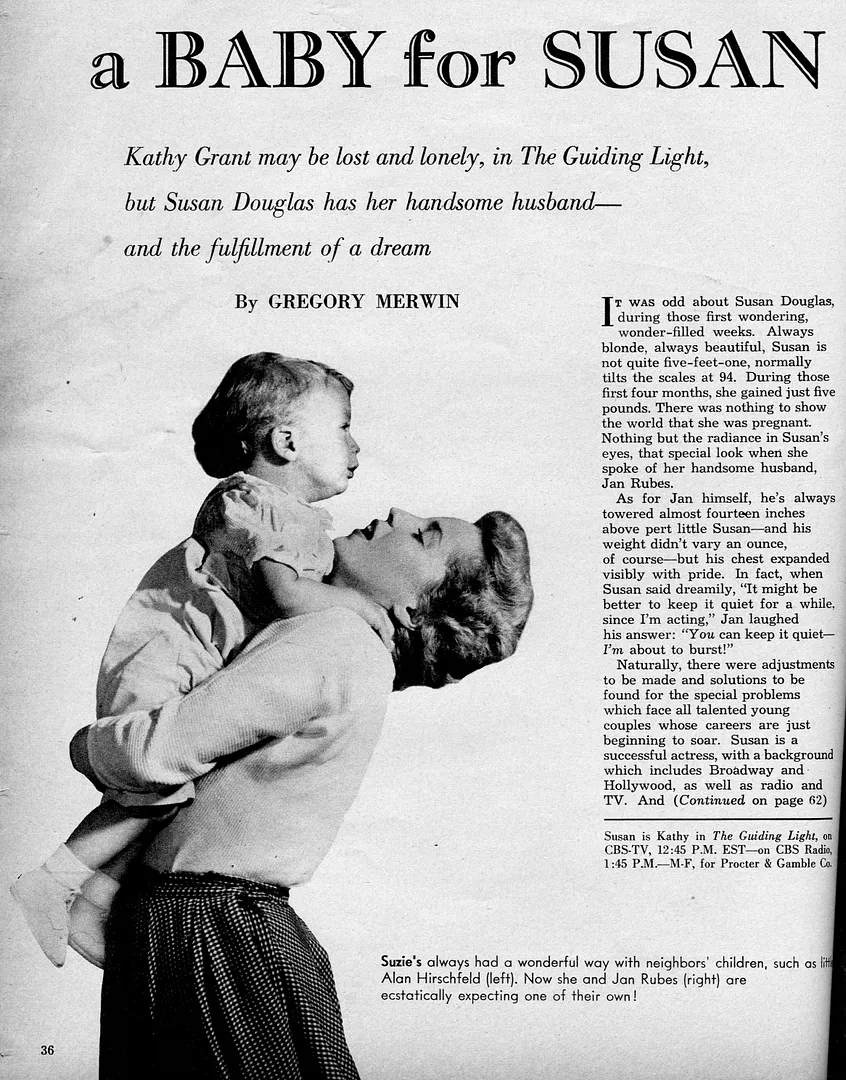
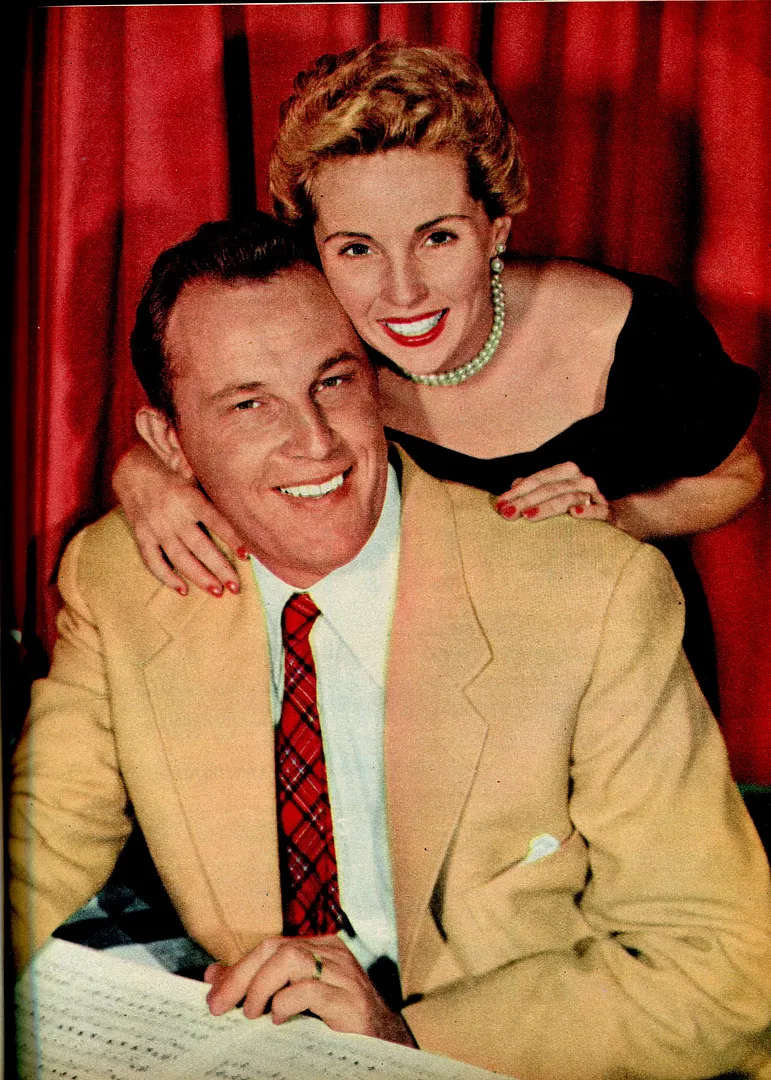
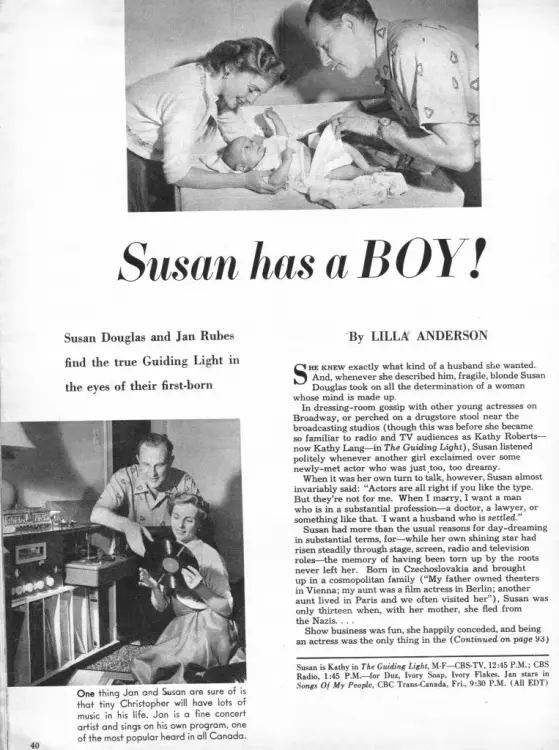
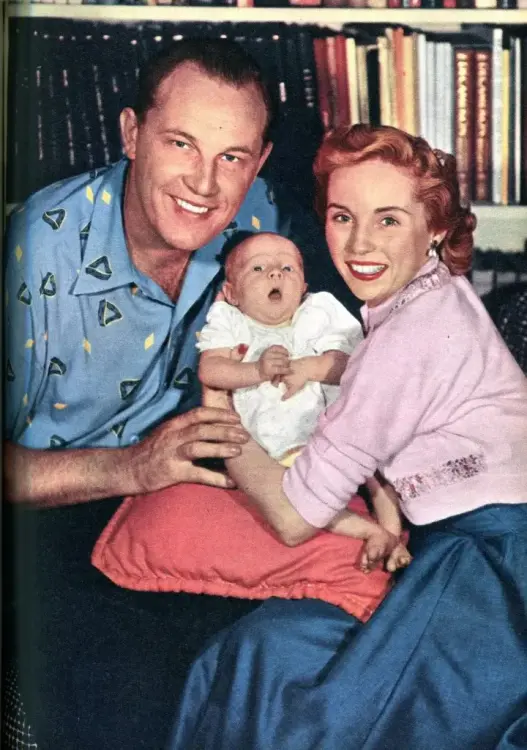
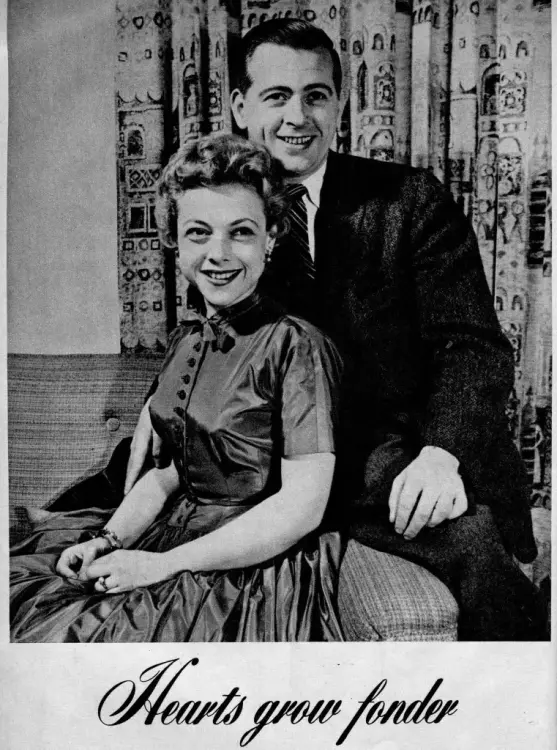
October 1954 Radio TV Mirror world she wanted to do, but when it came to marriage...There, all her longing for the comfortable, secure home she still remembered influenced her emotions, and a European perspective clarified her plan. "I want an American," she would specify, and she would brush aside all the other girls' mention of romantic Latins and Frenchmen who could turn a graceful compliment. "That's all very well," she would state, "but Americans make the best husbands of all." Susan's mind was made up, and Susan, being the kind of girl who plans and then make those plans come true, fully expected that, when the time came for serious romance, everything would work out exactly according to the script she prepared in her own mind day by day. The doctor or the lawyer - the American of substantial profession, understanding heart and great consideration - was bound to turn up right on cue. There was just one thing Susan overlooked. Drawing as she did on age-old feminine wisdom when making her plans, Susan should also have recalled that, by tradition, Cupid is the most capricious of creatures and notoriously an erratic marksman when he shoots his darts. Susan, of course, fell in love with the exact opposite of the man she pictured. It happened in Toronto, where the Canadian division of United Artists was making the picture, Forbidden Journey." Susan, having just made "Lost Boundaries" for United Artists in Hollywood, was one of the two non-Canadians in the cast. The other non-Canadian was Jan Rubes (pronounced "roobesh",) a tall, broad-shouldered young man chosen for the role of a Czechoslovakian stowaway. It was more than a mere play part for him, Susan soon discovered. He, too, had been born in her own native country and had come to Canada in 1950. Instantly, there was the appeal of memories shared, the sound of songs long unheard. Jan, Susan learned, had been Czechoslovakia's junior tennis champion in the carefree days before the war. He also had been cross-country ski champion. His mother was still in Czechoslovakia and so was Susan's father. But the songs were more important than the memories, for Jan, a lyric basso, had already achieved a program over CBC Trans-Canada titled Songs Of My People. Directed particularly toward recent immigrants, each week it featured the folk songs of a different national group. Jan, who speaks five languages and sings in twelve, was writer and narrator as well as the singing star. Through his songs and his stories, he sought both to ease the immigrant's nostalgia and to help him adjust to his new home. Susan was charmed with Jan and Jan was charmed was Susan. So charmed that, during the first month after she returned to New York, he ran up a phone bill of ninety-six dollars, and hers totaled seventy-eight. Susan's dream of a native-born American husband diminished. It vanished entirely when even their tenuous telephone communication was interrupted by a concert tour which took Jan out of the country for six months. In the loneliness of awaiting his return, she realized that the labels she had so blithely decided upon held little meaning. Jan might have been born in Czechoslovakia, but he, too, could apply for naturalization. The important thing was that he had absorbed the American idea that marriage is a partnership. He might be in show business, but he shared her desire for a secure, comfortable home. They were married in New York on September 27, 1951. Says Jan, "It was sort of a hasty wedding. After we got our tests and things out of the way, there were just three hours left before my visitor's visa expired." Their honeymoon was a trip to Toronto, where Jan returned to his program. Then began the period in which Jan staked a claim to being the champion long-distance commuter. On Thursday nights, he took a plane from New York to Toronto, did his show on Fridays and returned Friday night. Under such circumstances, setting up an apartment held difficulties. Says Susan, "That's when I discovered that Jan and I had reacted in opposite ways to the upsets which war had brought in childhood. I'm a great planner. I have to try to work things out in advance. Jan, on the other hand, is a spur-of-the-moment person..." The mark of Susan, the planner, is on their choice of locations. The building, on 72nd Street, i s conveniently close to Central Park. "It will be easy to get out in the sun," she said - but she now admits that she added to herself, "or take a baby out for an airing." The extra bedroom drew the same kind of consideration. "We'll make it a study and guest room," she decided - then silently hoped, "or a nursery, a little later on." To Susan, the color scheme was obvious. "Let's do it in blue," she said. Jan, reading her mind, teased her, "Hadn't it better be pink? Our first is bound to be a girl." Susan, summoning courage, said it out loud. "I want a boy. I want an American son." They compromised on aqua and moved in desks, daybed and piano. Furnishing of the rest of the apartment went along in modern style with a Charles Eames dining table, rush-seated black chairs, a comfortable sofa in a black and white print, a marble-topped coffee table, and occasional chairs in pinkish-orange to match the drapes. For their bedroom, they chose yellow and gray. Susan was her own decorator. "And what a job!" she exclaims. "It seemed as though every time I found something I wanted, Jan was in Toronto or out on a concert tour. If I asked whether he liked the idea of orange drapes he'd ask, 'What shade of orange?' And I'd be stuck for trying to describe it." For all his stated refusal to look ahead, it turned out to be Jan who did the most serious planning of all, and he assumes an understandably self-satisfied air as he takes up the story: "I was in Chicago to sing at the Grant Park concerts last summer, so I thought that would be a good time to go see Irna Phillips." Irna Phillips, author of Susan's CBS serial, The Guiding Light, is a woman wise in the ways of young couples who obviously are much in love. It's altogether likely that she anticipated Jan's deepest purpose in meeting her and made it easy for him to introduce the subject. He says, "We got along so well that just before I was leaving I mentioned that we'd like to have a family...." Miss Phillips knew that practical considerations momentarily overshadowed their deep hope. Considerably, she commented that Jan's move from Canada to the United States had been expensive and that his airplane commuting continued to nip deeply into the family budget. "Are you concerned about Susan staying on the show?" she asked. Recalling what happened next, his serious face breaks into a wide smile: "Irna said we should go right ahead." She was the first one they called when, in September, they knew the baby was on the way. Under the circumstances, they had anticipated that Susan would stay on the show only until January. Says Susan, "I didn't know what else Irna could do about it, for she couldn't very well write a baby into the script. On the air, as Kathy, I had just left my husband and she wouldn't have time to get us back together again." But Miss Phillips and the producer and the director proved resourceful. Camera shots and action were planned to keep Susan's real-life condition a secret on the air. She remained on the show until two weeks before her baby was born. Then Miss Phillips took care of Kathy's absence via a nervous breakdown which was quite in keeping with the plot. Meanwhile, Susan and Jan were experiencing a personal drama as engrossing as any which could ever be unfolded before cameras and microphones. Says Susan, "It's the most wonder-filled moment, when you first realize that you have another person to plan for." That person had to be a boy, Susan announced. Others thought differently. Says Jan, "I believe it was good psychology on the doctor's part to try to convince her the baby would be a girl. That way, she couldn't be disappointed." Sensible Susan admitted - out loud, at least - that the girl-boy matter was out of her control. She'd settle for a Baby. But another matter was definitely within the range of her own planning. "Whichever it was to be," she says, "I wanted the baby to have the best possible start in the world. Also, I wanted to know every minute exactly what was happening." With that attitude she asked her doctor about natural childbirth - the method by which the mother is taught to cooperate with the processes of nature, rather than fighting them, and thus make unnecessary the use of drugs or anesthetics. Susan recalls with satisfaction: "The doctor advised me to take the classes. I had nothing to lose by doing so. Even if I changed my mind later and wanted anesthesia, I'd just be that much better prepared. He realized I didn't like surprises." One surprise, however, was much to her liking - the baby shower. She says, "I'd never even seen any kind of a shower. Once I had heard some of the girls talking about one and had thought that was such a nice custom I'd like to go to one sometime. It never even occurred to me that I might have one. Charita Bauer, who plays Bert, and Ellen Demming, who is my stepmother on the show, had to trick me into coming over to Charita's house." When she did arrive, the party delighted her. She says, "They had the place all decorated with pink and blue balloons. All the women on the show and the wives of the staff were there." For all her careful preparation in the hospital classes, Susan continued to have one worry. To her doctor, she said, "You'll just have to do something to make sure the baby doesn't arrive on a Friday. It will be just awful if it's born when Jan's in Canada." Jan, too, was concerned. Part of the natural childbirth method is to coach the father as well as the mother in what to anticipate. The doctor could offer her little aid. "That's up to you," he said. "You'll just have to determine it can't happen." He was even less reassuring about the time and only when Susan went to see him on Monday, May 24. "Another week or ten days," he predicted. Susan now admits, "I was certain then that it was bound to happen on a Friday - and bound to be a girl. I felt awful." Then she brightens. "Jan and I were watching the baseball game. That is, Jan was watching. I think the only thing I could see was a mental picture of a plane taking off for Toronto. Until all of a sudden, I got a pain." To hear her tell it, that particular pain was the most blissful sensation in the world. She continues, "Jan got his stopwatch - the one he uses to time his radio programs - and we waited for the next contraction." Because of their training in the natural childbirth classes, they knew what to expect and how far the process of birth had advanced. "We didn't even call the doctor until seven o'clock the next morning," Jan beams. "He told us to come over." Susan chimes in. "They put a mask, a cap and a gown on Jan and he was right with me, timing the contractions, until the last twenty minutes. I appreciated it, because it took quite a long time." The "quite a long time" was from 8:00 A.M. until 5:30 P.M. but Susan says she was never afraid. "By the stopwatch, I learned that the pains lasted forty-five seconds each and were five minutes apart." A shot of a sedative gave her the impression of a two-hour sleep during the middle of the afternoon. "But even then," says Jan, "she'd signal me with a long, slow wink whenever a pain started, so I could click the stopwatch." At 5:30 P.M., May 25, 1954, Christopher Jan Rubes made his entrance into the world. He weighed seven pounds, thirteen ounces, and was twenty-one inches long. "He'll be tall, like his father," Susan says proudly. What the baby already means to Susan and Jan is indicated by what happened on their vacation. In July, Susan joined Jan on one of his Toronto trips, leaving the baby with the nurse who has cared for him ever since he came from the hospital. They attended the Shakespeare festival at nearby Stratford and then had a few carefree days of water skiing at Lake Simcoe. "We had planned to stay until Sunday night," says Susan, "but on Friday we went to visit some friends whose baby had been born ten days earlier than ours." Like all proud young parents, the friends boasted how fast their child had grown, insisted he now could follow them with his eyes, that he knew their voices. Says Susan, "Then the same thought hit both Jan and me at the same time - what if our baby had forgotten us while we were gone, what if he thought the nurse was his mother!" They hurried back to their hotel and called the airlines. Could they have accommodations the next morning, they inquired. The planes were crowded but the reservation clerk sensed their concern and asked, "Is this urgent?" "Urgent!" Jan exclaimed. "It sure is. We have to get home to our baby." Says Susan, "That's the quickest way to say it. He's the one we have to come home to. With him, our roots are down. We have a home. A home which centers around a new human being. We have an American son." And the future? There, long-planning Susan and spur-of-the-moment Jan have come to a meeting of the minds. "We'll not make any definite plans<" says Susan. "Both of us have seen too many long-range plans made for us and then upset by things beyond our control. We'll just go on, doing the best we can every day. And, the Lord willing, we're going to have three more children to join our American son."

-
October 1953 Radio TV Mirror

-
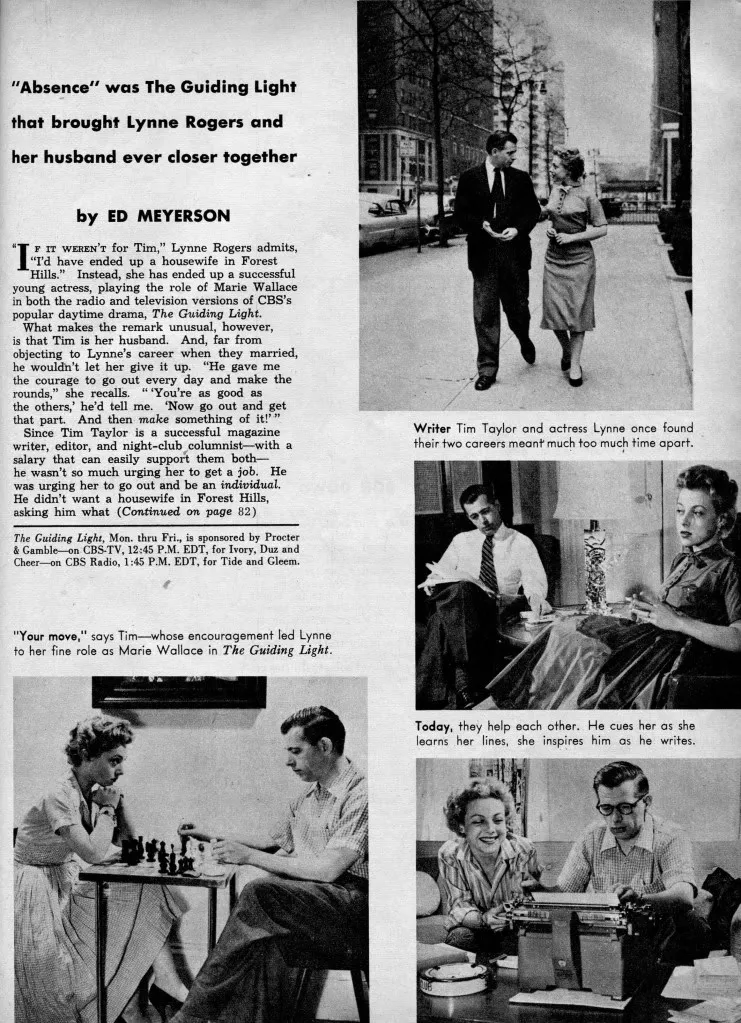
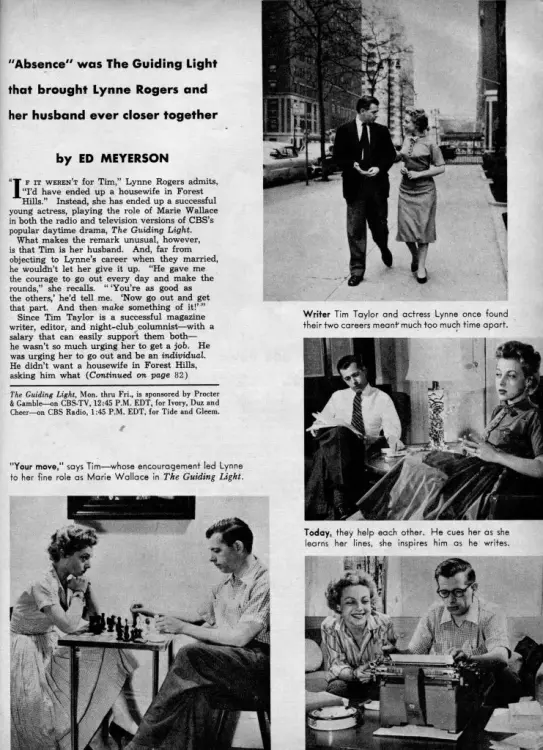
August 1956 Radio TV Mirror happened at the office today. He wanted someone he could love as an equal - a partner he could team up with in the Battle of Manhattan. "Together," Lynne explains, "we do the best we can. It isn't he alone doing the best he can, while I just do the housework. It's both of us. We each have our own existence, and each respects the other's privacy. This doesn't mean that we're less in love. It merely means that we don't intend to engulf each other." If this sounds suspiciously like living apart, a visit to the Taylors in their comfortable Manhattan apartment offers quick reassurance. Obviously, no two people ever got more enjoyment out of "living apart" - together. Although you've come to get Lynne's story - and although Tom withdraws to a far corner of the living room determined not to interfere - it isn't possible. They're so much a team, you can't talk to one without involving the other. And Lynne's story wouldn't be complete, not without Tim's story, too... "I'm a native New Yorker," Lynne starts out, waiting for the customary exclamation of surprise. It doesn't come. "But I was born right here in New York," she continues, and looks to Tim for help. And that's how the other half of the team gets involved. He knows, from his own experience, that a surprisingly large percentage of actors were born "right here in New York," and each thinks it's unusual. And so, like a lot of other actresses, Lynne was born in New York City. Her father, Louis L. Rogers, is a stock broker. She studied art at the High School of Music and Art, developing a talent which was to come in handy for her role as the artist in The Guiding Light. "When the script called for Dick Grant to sit for his portrait," she recalls, "everyone was surprised that I could actually fill in the canvas myself." At Queens College, however, the artist decided to become an actress. She majored in English, speech and dramatics, doing stock at the Provincetown Playhouse. She also managed to graduate magna cum laude. At Columbia University, Lynne started to work for her master's degree in Drama and Comparative Dramatic Literature. Transferring to the Yale Drama School, she was about to return for the second year when she landed the role of Myriam in Light of the World, based on the New Testament. "After a year, the show was replaced by a quiz program," Lynne says it with a dead-pan expression - it's the only comment she can think of. "That was 1950," she remembers. "Then CBS assigned me to be an actress-at-large on the Stork Club show. I was to be there just in case - you know, in case I were needed or some of the guests didn't show up." A year later, CBS hired Tim to be a writer on the same show. "They wanted me," he says, "it would be a short job - only three or four weeks. I was to do a preliminary interview of the guests, then draw up a list of ten questions. These were copied on little pieces of paper and pasted to coffee pots for Sherman Billingsley to read off." And that's where they met - in the famed Cub Room of the Stork Club. Not the real Cub Room, of course, but the television studio designed to look like it. "We said hello," Lynne recalls. "Both of us were left-handed - so there we were, with things in common." That was the start. They had time to discover even more things in common, for Tim lasted thirteen weeks - a record for writers on the show. Then Igor Cassini, who conducts a similar television program, hired Tim to be a writer for him. Tim, in turn, hired Lynne to be "his Girl Friday." They worked together until the summer, when Cassini and Tim hied themselves to Europe to interview assorted celebrities. In a way, Lynne didn't mind. Proximity had made them very close, but Tim seemed shy of marriage. She knew that the cure was to "give him a lot of freedom, make him miss you." It worked, too. Tim now confesses that he "wrote more to her" than he ever wrote for the show. Professionally, however, that summer was "a bleak period" for Lynne. But then, after weeks of discouragement and making the rounds, it happened. In this case, because Kermit Bloomgarden was the producer, Lynne thought she was trying out for a role in his stag production of "Autumn Garden." Instead, she found that she was auditioning for the road company of "Death of a Salesman." But that was the same afternoon Tim's boat arrived from Europe. He was "really mad" when Lynne wasn't at the dock to meet him. They got together, however. Explanations were made. And they had a proper reunion. But they also had prolonged farewell. Lynne's contract called for one year with "Death of a Salesman." By the time Lynne returned from her tour, Tim was ready with his proposal. Only they couldn't get married. They didn't have an apartment. And that's how they happened to have a June wedding. It wasn't sentiment. Once again, it was circumstance. It took them six months to find a place to live. As it turned out, however, it was well worth the wait. Their apartment is only two-and-a-half rooms, but that's more than most New Yorkers dare hope for of heaven on earth. It's in an old, white brownstone off the lower part of Fifth Avenue. The rooms are enormous, with twelve-foot-high ceilings. There are fireplaces in both the living room and bedroom. And what's more - "Eugene O'Neill once lived here." The wedding should have been romantic. They drove out to Greenwich, Connecticut, a lovely town where Tim had once worked as a reporter. But the Justice of the Peace was nervous. He had only married three couples before. Well, the bride and groom were nervous, too. They had never been married before at all. Here Lynne was, promoting to "honor and obey" - as though her life were her own to do with as she pleased. She was an actress. It was enough being at the beck and call of producers without having a husband to obey as well. How could she possible handle two careers? And Tim, reaching in his pocket for the wedding ring, felt that he was giving up his freedom forever. With this ring, he would be chained to those two-and-a-half rooms - in sickness and in health, till death do us part. It wasn't death that parted them. Once again, it was circumstance. They were married on June 7,1953. On June 30th, Lynne had to leave for the Lakeside Theater in Putnam, Connecticut, where she had a ten-week contract. The Taylors can tell the story now, laughing at their early doubts. Lynne has proven she can handle two careers with equal success - both as Lynne Rogers on television and as Mrs. Tim Taylor in private life. As for Tim, sitting beside her on the sofa- he's been in those same two=and-a-half rooms for three years now, without once looking for the nearest exit. "And we owe it all to that ten-week separation," Lynne says. "It was the best thing that could have happened to us." It gave us time to think things over," Tim adds. "I know I'd be there in the apartment. I'd be conscious of things - a perfume bottle, a summer dress among the clothes in the closet - things I took for granted. Then, all of a sudden, I'd realize: Someone else lives here, too." Lynne describes these ten weeks as "sort of a limbo period." It gave her a chance to "go into marriage kind of gradually." For example, she suddenly realized that a married woman doesn't go out with other men. She wasn't forbidden to do so. It just came over her that she didn't want to. It had more meaning, she found, seeing the one man she was married to rather than the many men who were just friends. It was the same with cooking. Suddenly, she realized that she wanted to cook for Tim. She started collecting cook books. "And once she made her mind up to it," Tim admits, "she became good at it." As a team, they also found that they could help each other. Tim, who periodically makes a round of the night clubs for his weekly column, declares that Lynne is "better than a tape recorder." Tim, in turn, helps Lynne by cueing her in her parts. But, more important, he has built up her self-confidence. It seems incredible that anyone as pretty as Lynne, from insecurity. Her face is heart-shaped, with the look of a happy Valentine. Her auburn hair fairly cries out for color television. But the forehead! It's dangerously high for an ingenue. Not that being bright is any handicap for an actress, but Lynne looks every bit as intelligent as she is. Tim has made her understand that youth alone has been her handicap. She has a poise and intelligence far beyond her years. Just right for a leading lady, but not for an ingenue. And one day, Tim predicts, Lynne will graduate into stardom. A glance at the record proves that Tim is right. In her five seasons of stock, Lynne has played such unusual roles as the heroines in "Bell, Book and Candle," "A Streetcar Named Desire, "Dark of the Moon," and "The Sea Gull." And last January, when she became Marie Wallace on The Guiding Light, she was taking on the difficult role of a young artist who suddenly found herself going blind. But, most of all, they have helped each other by "just being there." "Home," says Tim, "is where you can be who you are." But it's one thing being yourself, it's quite another being by yourself. It's nice to have someone to make plans with. Speaking of plans, Lynne says: "We'd like to go to Europe and we'd like to have a family." It's also nice to have someone to play chess with. And, when you glance at the chess set, sitting on top of a handsome mosaic table, Lynne suddenly laughs. That table was almost the occasion of their one and only fight. "That's my contribution to the do-it-yourself craze," Lynne explains. "I made it all myself, and gave it to Tim last Christmas as a present, I did all the work at a friend's house. Every day, I'd be out for a couple of hours, trying to get it done in time. And then I got sore. He wasn't the least bit concerned about where I was disappearing every day. Not once did he ask me where I'd been!" But Tim was merely sticking to the team rule, to respect each other's privacy. As Lynne now understands: "This doesn't mean that we're less in love." It has made them more in love than ever.
-
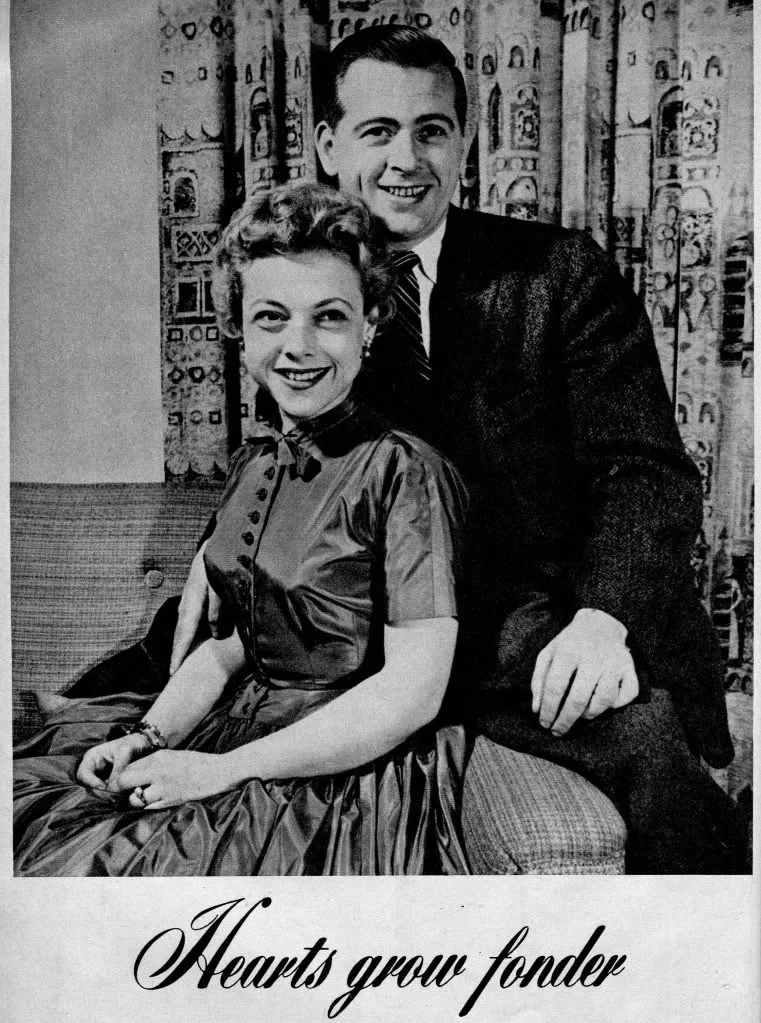
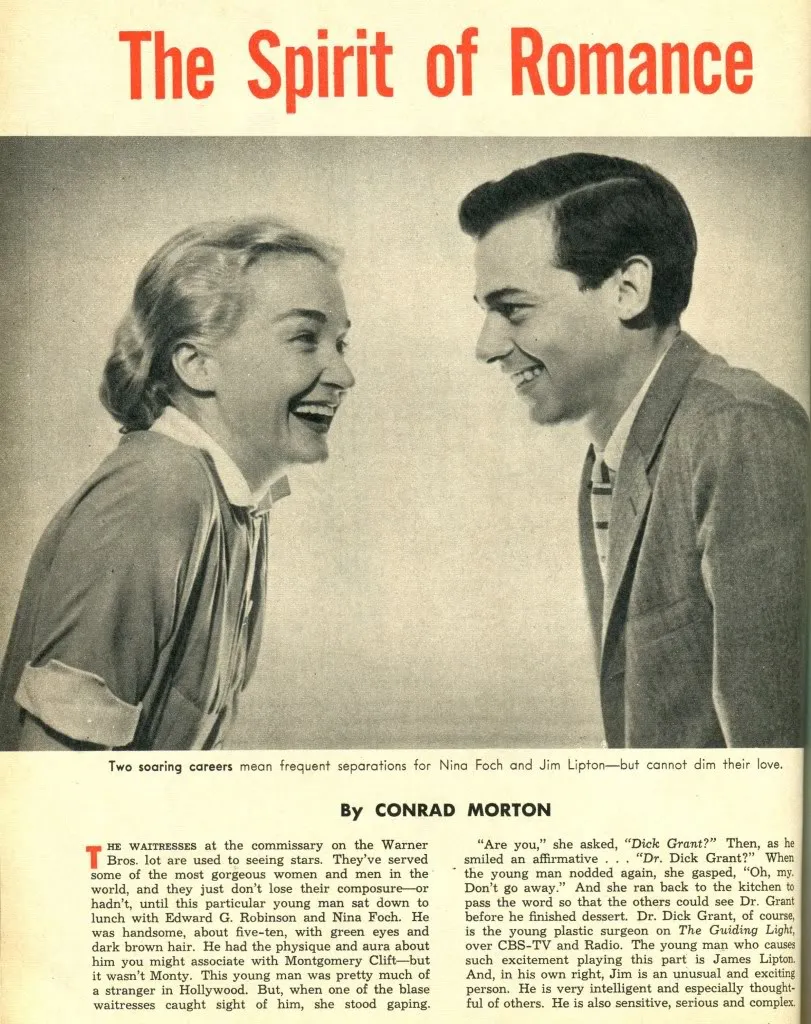
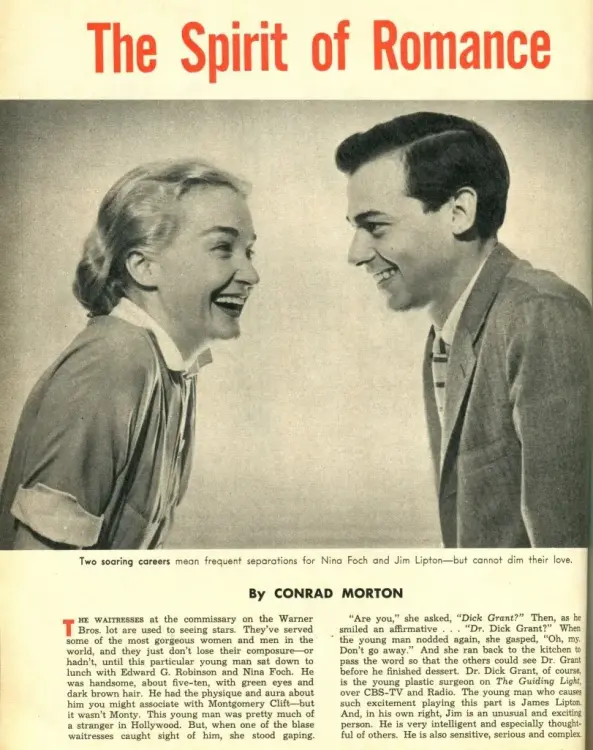
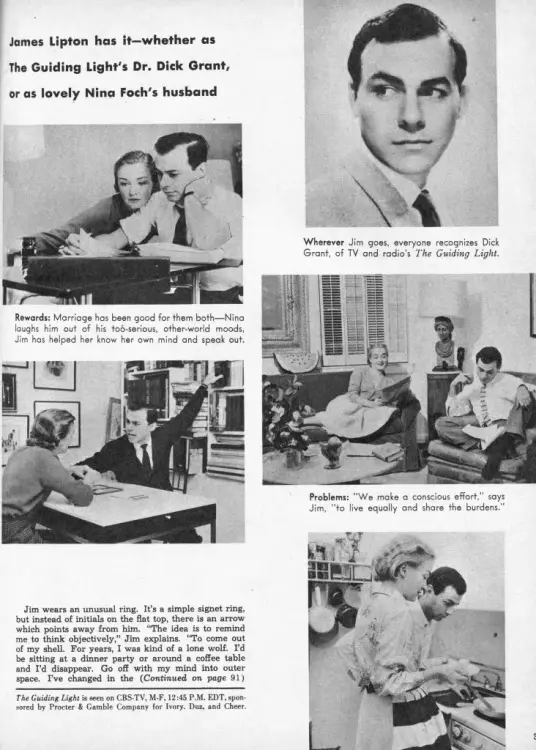
November 1956 Radio TV Mirror past few years. Nina has helped greatly." Mrs. Lipton is the former Nina Foch - and still Nina Foch, the actress. When she catches Jim disappearing, she laughs him right out of it. He says, "I have an insincere smile that I use when I'm lost - you know I'm thinking about something else. Maybe Nina says something and I give her this smile. Well, she knows what it means and she mimics me. And she won't quit. I gave up smoking for gumchewing and, when I get lost, I get to chewing pretty hard - and she mimics this, too. She keeps it up for ten minutes or more. S Until she gets me laughing. And then, she mimics my laugh!" The Liptons have been married since June 12, 1954, and they have a good marriage. Both are artists and individualists, but they make a successful go of their marriage. "Nina has her day, too," Jim notes. "She doesn't get lost as I do, but she can blow up like a summer storm. She can have an emotional explosion which stuns me - and then, a minute later, be as happy as a lark. Of course, I'm in favor of the explosion. Nina was too shy when we first married. She gave in too easily. I was always saying, 'Now are you sure you want to go there?'" Jim puts as much thought into his marriage as he does into his career. And most of the time his motor is running. He usually has a half-dozen projects going. During the past year, he continued his studies, finished an original play, adapted a Moliere play and then it. He's been Dick Grant in both the radio and TV versions of The Guiding Light. Nina also leads a hectic life, "Sometimes we don't see each other to talk to until weekends," Jim says ruefully. "Or we may meet at a class in the evening and say 'good morning' for the first first time." Jim's schedule is a full one. He is at the TV studio at 8:45 A.M. for The Guiding Light rehearsals. The show goes on at 12:45. He's off the air at one, of course. But, until just recently, there was then a mad dash to rehearse and broadcast the radio version of The Guiding Light. At this writing, a good part of his afternoon is still devoted to TV rehearsals for the next day's show. In the evenings, there are voice lessons with Arthur Lessac, fencing lessons, ballet, gymnastics, and modern dance. He will probably run into Nina at the ballet class, or at 11:30 P.M. in Harold Clurman's acting workshop. They are at Clurman's until two in the morning. It makes for a frenetic life, but things are accomplished - and the marriage works. "I figure a good marriage has two possibilities," he says. "There is one in which one person, usually the man, calls all the turns and the wife keeps up the home. Or there is our kind, where we are making a continual and conscious effort to live equally and share the burdens. What I mean is: Whoever gets out of bed last in the morning makes it. At dinner time, we work together in the kitchen, eat and clean up together." They have been living in a two-and-a-half-room apartment at Seventy-second Street and Park Avenue. Any way you look at it, Park Avenue is a far cry from Jim's beginning. "As a kid," Jim recalls, "I lived in a tough neighborhood. The school I went to was the second toughest in all of Detroit. We had thievery. Sluggings. Knifings. It was tough." Jim was born in Detroit, September 9, 1926. His parents separated when he was three. He was raised wholly by his mother. She is a college graduate who then taught grade school and worked as a librarian. "She is a splendid woman," Jim says. "I am very indebted to her. She was the good influence in my life." Because his mother worked, Jim was alone much of the time. She provided him with books, but it didn't keep him out of the streets. "The gangs did a lot of fighting," he remembers. "My behavior wasn't the best. However, I drew the line at dishonesty." This wasn't easy during Depression days, for Mrs. Lipton and son were poor as church mice. They lived on skimpy rations. They had no luxuries. The summer he was thirteen, Jim Lipton got his first job. He worked in a photo-engraving plant at twelve dollars a week. He washed photographic glass in nitric acid. This turned his hands yellow - but that was nothing compared to the pain when he frequently cut his hands on chipped or broken pieces of glass and the acid got into the wound. Another chore was to sweep up. He was at this job, near the end of the summer, when his job vanished. He was sweeping up the floor - and suddenly there was no floor. The plant had blown up. Luckily for Jim, he wasn't hurt. "That was the year we moved, too," he recalls. "To a very small apartment, but in a better neighborhood. We had been living with my grandparents, and it was the first year my mother and I had any kind of privacy. when Christmas came, I insisted that we had to have a tree. Well, there was only a quarter for the tree, so I put off shopping until late Christmas Eve, when prices came down." He had acquired one string of six lights, one box of small colored balls and one box of icicles. What Jim got for his quarter was a tree that stood about six-feet high with five or six branches - and about as many needles to each branch. This he took home and, together with his mother, he hung the balls and draped the tinsel. They strung the lights vertically, straight up the trunk. "Mother and I played it straight, too. We both admired the tree and said, 'How wonderful!' Christmas morning, one of my uncles came over and we showed him the ridiculous-looking tree. He said nothing. He sat down. His mouth was working and he was trying to control himself, but he couldn't. He burst out laughing. He was staring at the tree and laughing. Then I laughed and so did Mother. We laughed till we fell out of our chairs." From the age of ten, Jim's ambition was to be a lawyer. That year, his mother had been ill. He was sent away, to spend the summer with an uncle in California. The uncle was an attorney and - compared with Jim's Detroit home - lived in great luxury. So Jim decided he, too, would study law. In grade and high schools, however, he worked in dramatic productions. Ernie Ricca, now a New Yorker and director of The Romance of Helen Trent, was head of production at Detroit's WWJ. He heard Jim, who was sixteen, on a high-school radio show and invited him to audition for professional work. Within a year, Jim was making about sixty dollars a week as the nephew of The Lone Ranger. Continuing his radio work, Jim enrolled in an accelerated pre-legal course at Wayne University and was a sophomore when he enlisted as an air cadet. That was during World War II. Jim was still a cadet when the war ended a year later, and he was discharged before winning his wings. "I went back to Detroit for a week," he remembers. "Just one week. I couldn't stay there much longer. There were too many unpleasant memories. So I went on to New York." That was in December of 1945. He auditioned for radio work and tried to enroll at Columbia University in a pre-law course. Columbia, overcrowded with New York veterans, turned him down. But, within two weeks, he had three substantial roles in network daytime dramas. He had a part in Just Plain Bill and the romantic lead in both David Harum and The Strange Romance of Evelyn Winters. "It was another year," Jim says, "before I completely gave up the idea of studying law. It was about 1947 that I became earnest about the theater. I began to cut down on my radio work so that I could study acting. I studied with Stella Adler, a wonderful teacher. I studied French three evenings a week for two years. The study still goes on and I've been getting the equivalent of a college education. For example, I have a list of classics to be read. I'm working down that list. I haven't read a contemporary book in a couple of years." Jim Lipton has been succeeding as an actor. He has also made two movies. In 1950, he went to Greece to play the lead in the film, "Wheel of Fire," and followed this up with another, "The Big Break" - in which he was on the screen for all but three minutes. On Broadway, he has played in Lillian Hellman's "The Autumn Garden" and has held the lead in "Dark Legend." He has been Dr. Grant in The Guiding Light for four years. He's played in about every night-time TV dramatic show. He met Nina on a TV set. "That was the production of "The Skin of Our Teeth.' Of course, I couldn't help noting the particulars about Nina. She's a beauty. Blue-eyed. Blond. Pale skin. A beautiful figure. But she's a fine actress, and then it was all business. We just worked together." It was thirteen months before they met again. Nina was out of the city frequently. When Jim finally got through on the phone, she had a bad cold. A few days later, he phoned again. She still had the cold but allowed Jim to call. Another couple of dates and there was a spark. Time passed and the spark flamed and they married. The double-ring ceremony took place on a Saturday in Brooklyn. "I was working on The Guiding Light until late Friday," Jim recalls, "and then I had five days off. We wanted to marry on Saturday but couldn't find a judge to perform the ceremony. Most of them seem to play golf on Saturday. Finally, our attorney found a judge in Brooklyn who had a late date to tee off." Nina has said that Jim impressed her from the very beginning with his thoughtfulness. He didn't merely bring flowers. He first spun them into a gilded bird cage which held a colorful toy bird. And usually there was a reason behind the gift. Nina, although she has lived in the United States since she was eight, was born in Leyden, Holland. Her mother was an American actress and musical comedy star; her father, a distinguished Dutch musical conductor. In tribute to Nina's Dutch ancestry, Jim gave her colorful old Dutch maps. It's impossible to move a foot, anywhere in the apartment, without finding something intriguing to catch the eye. For example, in the living room there are a fork and spoon framed behind glass and hung on the wall - the utensils came from the personal table of George Bernard Shaw. The fork and spoon are ringed by original Daumier lithographs. There are a couple of plaques. One is Nina's Academy Award nomination. The other belongs to Jim and is the TV RADIO MIRROR AWARD for Favorite Daytime Actor. (Nina wears the gold medal which came with this Award, on her bracelet.) There is a scrawny but beautiful candelabra which holds fifteen candles. There is a Venetian map which is 400 years old. The walls are covered with maps, prints, mementoes and paintings - some by Nina. Jim brought a vase from Greece that is 2500 years old and it is on the shelf of a French cabinet which dates back to 1640. In the casement of the window above the cabinet is a plant that stands better than five feet tall. "That's a fatshedera - and Nina's pride," Jim explains. "When she goes away for a time, she makes me solemnly swear that I will water it daily. You see, Nina has never had luck with plants. This is the first that insisted on growing, and she has become close to it. Once there was soil lice in the plant, and as much as the lice upset her, she stood by the plant and refused to throw it out. We finally killed the lice without harming the plant." Their apartment is about six floors above the street. The walls are white with a touch of pink. The carpeting is green. Generally speaking, the apartment is furnished with antiques - English, Italian, French. Although it is as handsome as it is intriguing, the Liptons are getting crowded. In the bedroom, for example, is a stack of cartons that reaches to the ceiling. "That was my Christmas gift to Nina," Jim explains. "I gave her a complete darkroom. Rather the equipment for a darkroom. It's never been unpacked except to look at, for there's no place to set it up." Because they are crowded, they will be moving into a larger apartment - in a building now nearing completion. It will have an extra bedroom which Jim will use for his writing. And it will have a larger kitchen, important for Nina. "She is an excellent cook," Jim says. "You can tell that with just a glance at her spice and condiment shelf. I like to help in the kitchen and she is teaching me. She calls me her second chef. I'm allowed to slice onions, shell peas, stir things, turn the meat over and baste. I am permitted to make only mashed potatoes by myself." On Nina's recent Hollywood trip, she spent four months working in Cecil B. DeMille's "The Ten Commandments." Jim was home on the range alone. As a matter of fact, the day after Nina flew out, a delivery boy came calling with a gift from her. IT was a cookbook for Jim, inscribed, "Now you're on your own." And he did prepare many of his own meals while she was away. He even invented a few recipes involving peanut butter - peanut butter spread over a steak before broiling, or peanut butter baked on corn on the cob. Nina was a little horrified at some of these experiments. "We used to talk to each other every night," Jim says. "We always try to, wherever we are. When Nina was in California, we talked an hour to an hour-and-a-half every evening. Came to hundreds of dollars each month. But, after all, if a marriage is going to succeed, you can't let distance keep you apart." This is one aspect of their lives which makes for problems. Jim stays close to New York, but Nina must go out of the city for weeks or months at a time - with a show, to make a picture or a personal appearance, to work in a summer theater. So it's hard to plan for the larger home they want, the children they hope to have. But anyone who knows Jim and Nina Lipton also knows that these problems will be worked out, too - in the same spirit of romance and understanding which has already marked their courtship and marriage in the hectic world of show business.
-
Radio TV Mirror March 1955
-
@Reverend Ruthledge Thanks for the extra info on Clyde and his motivations, and on Bob. If there was more of an audience, I wish they had written a tie-in book about Trudy and Clyde and what became of them.
-
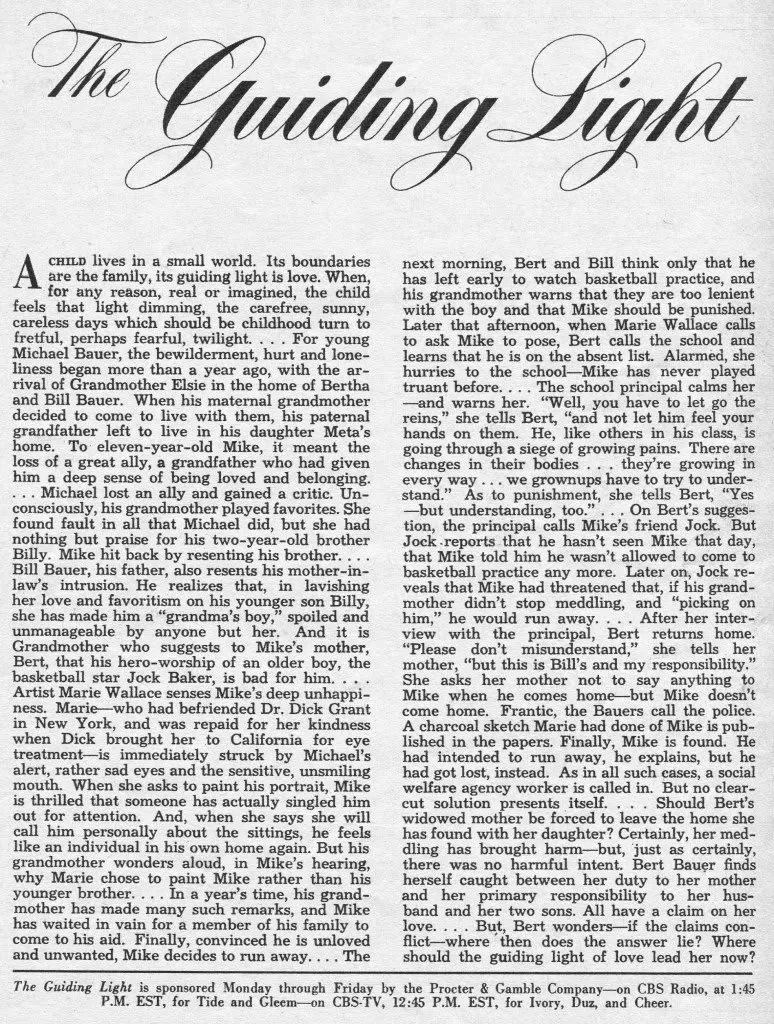
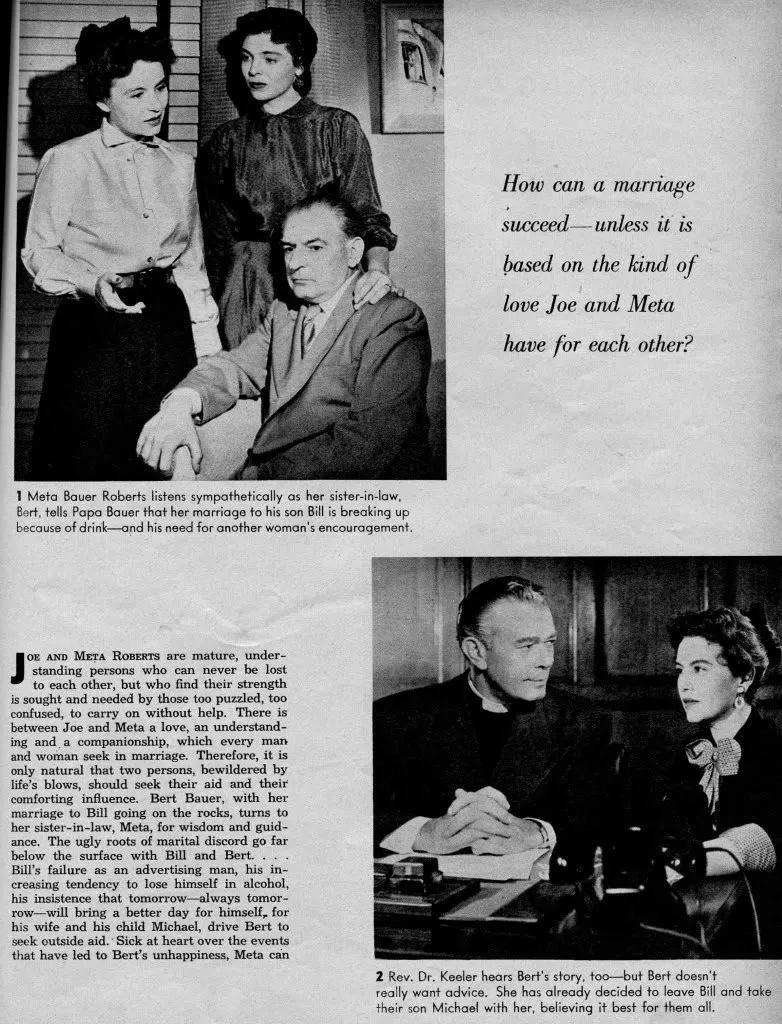
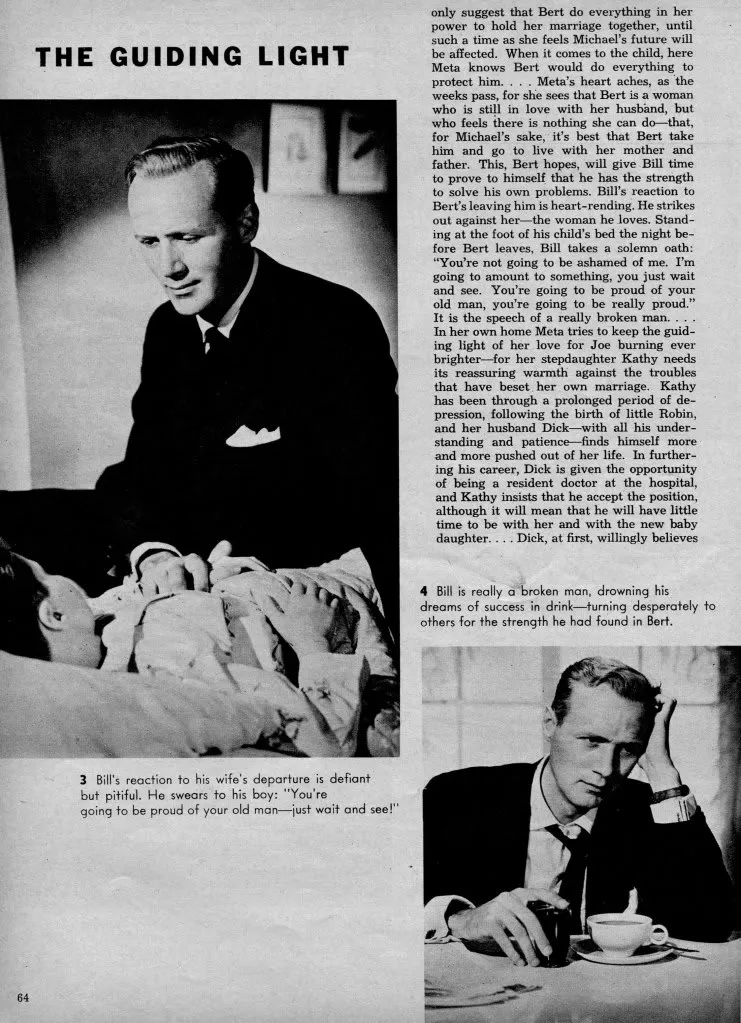
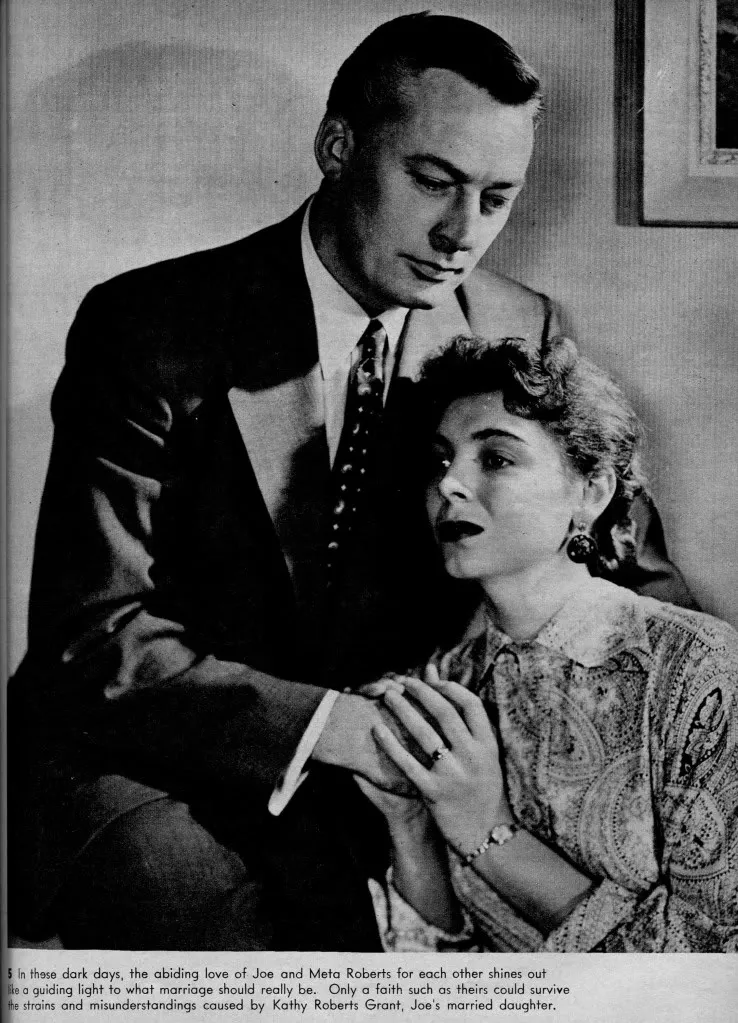
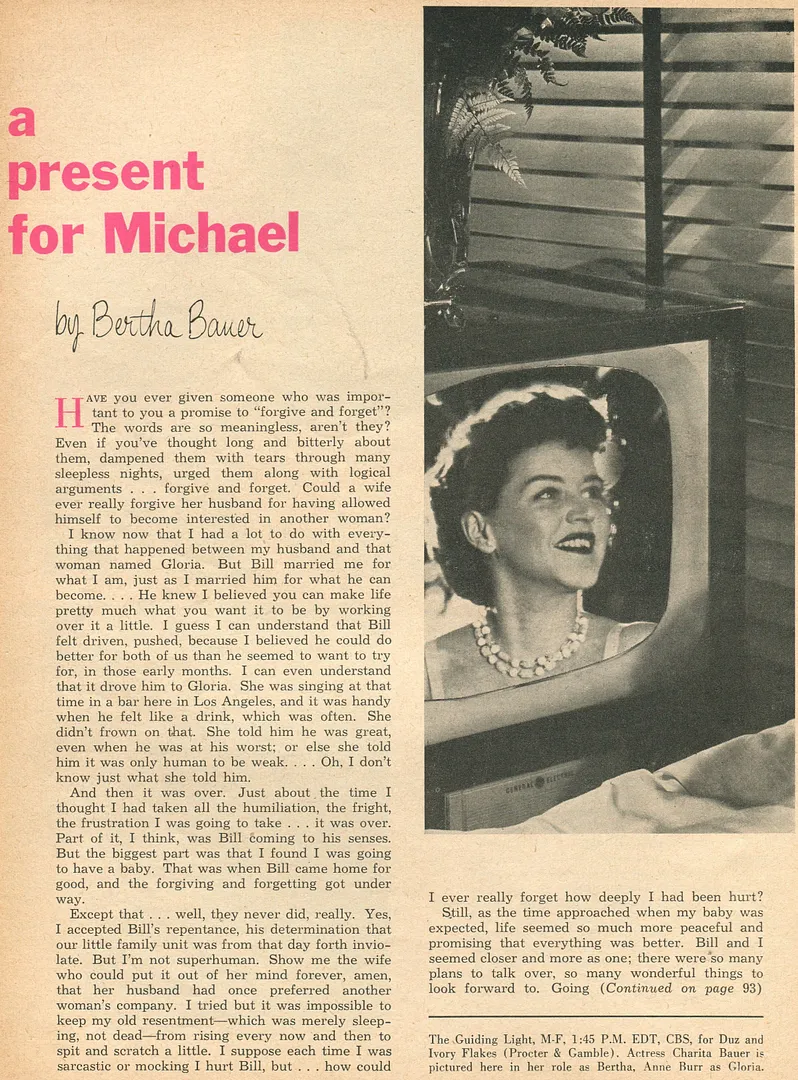
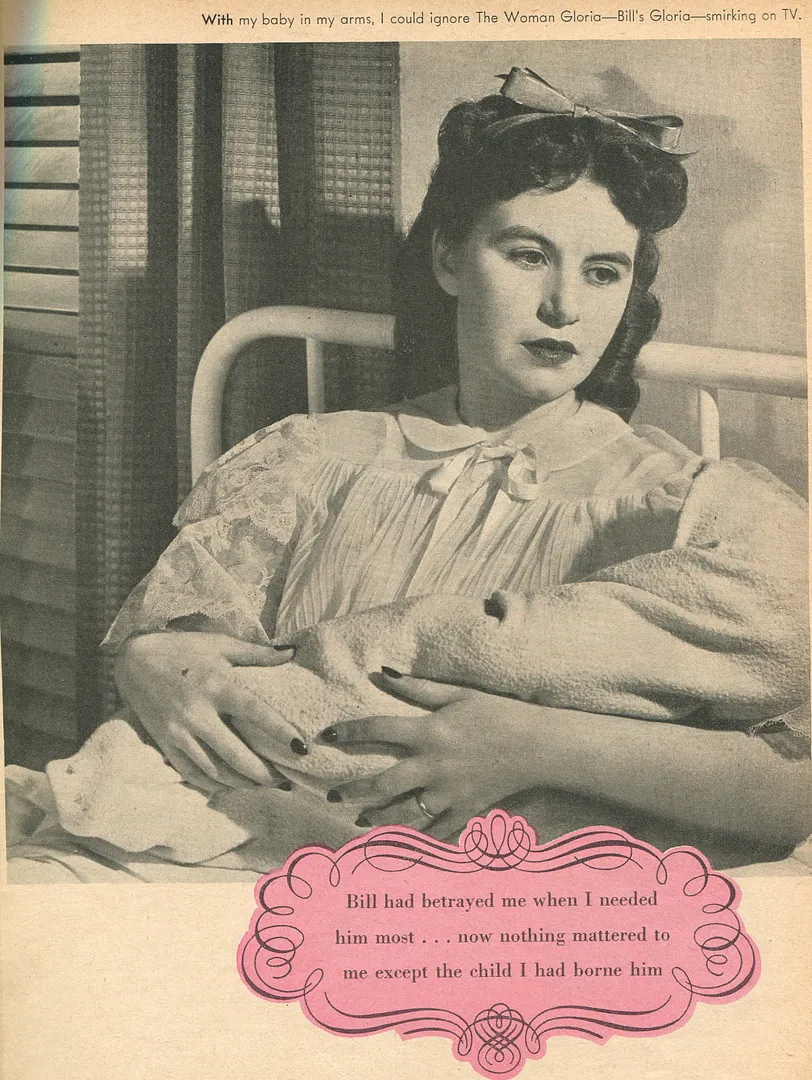
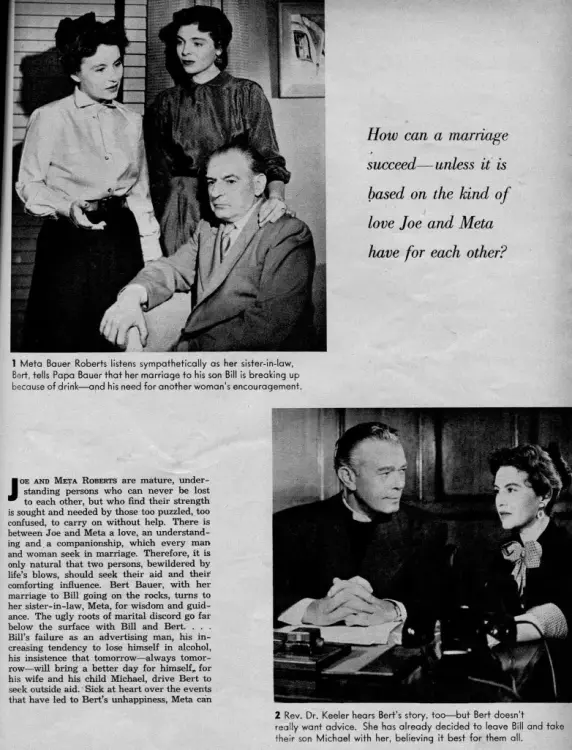
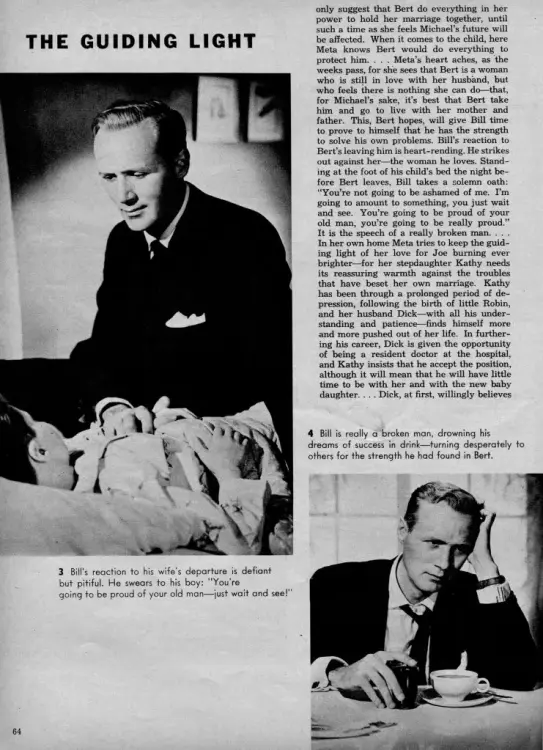
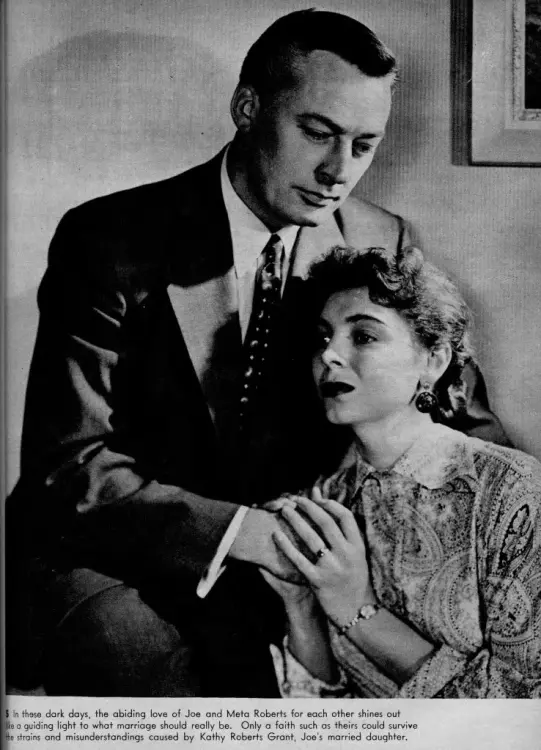
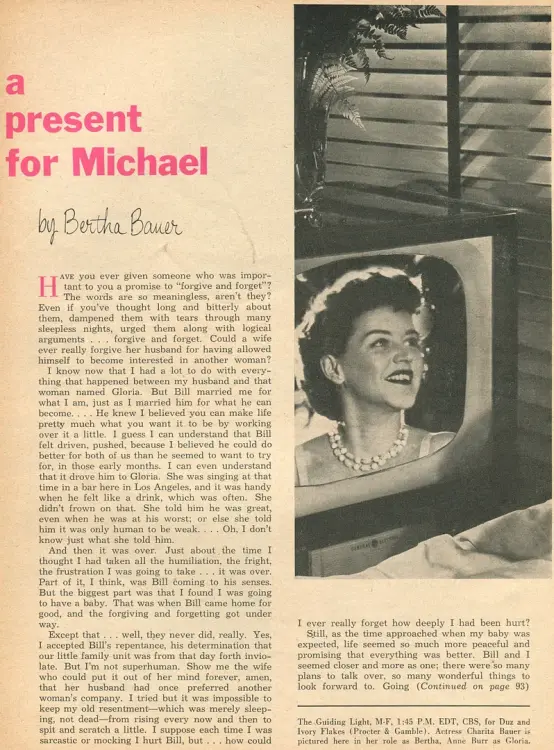
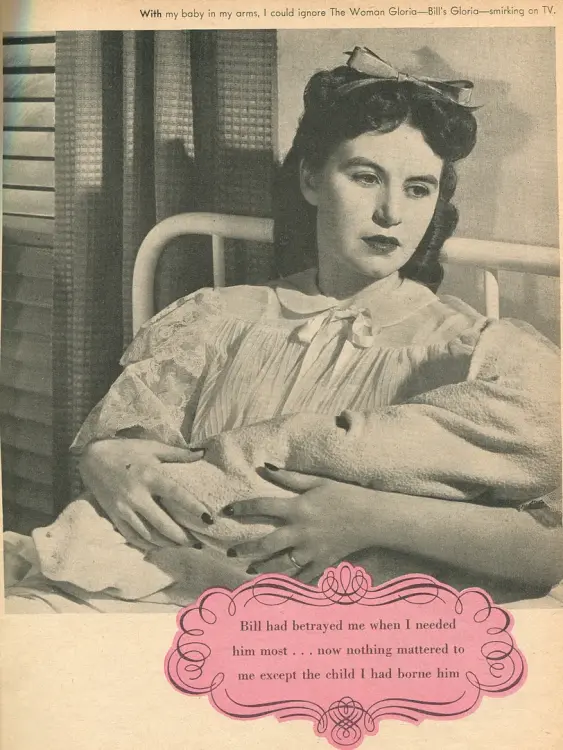
Radio TV Mirror August 1952 into my last month, I really did forget completely, from time to time. It no longer mattered. There were more urgent things, more exciting things, to think about than that old wound. And Bill perked up correspondingly. I suppose several weeks went by without a single quarrel. We didn't even argue when he told me, one Thursday at breakfast, that he had to fly to San Francisco on business over the weekend. "Short notice, Bill," I said. "is it something important?" "Well, sure, or I wouldn't leave you alone right now. Um - I'll tell you about it when it's settled. I hate to go, Bert. Did the doctor really say it might be any time now?" I smiled at his troubled face. "Really, I couldn't feel better. And if anything happens - even if I feel lonesome - I'll just call somebody to come over. Your sister Meta, maybe." "Well..." Bill said uncertainly. "Be sure you call Meta, honey." He kissed me quickly and hurried off. Such concern, I thought as I went about the morning routine. Such fatherly, husbandly concern. It was nice, though. Everything was nice, these days. The way the little house - and not so little, either, I thought proudly - shone and gleamed. All at once I began to laugh, realizing that I'd been talking busily out loud for the past five minutes. I would call Meta, I decided. Calm as you might be in the last few days, I guess you are never as calm as you think. I could use Meta's lovely face across the table, and her wonderful figure as an inspiration to get busy on my own the minute the baby was born. As it turned out, it was lucky I did call her, for the very next morning I woke up feeling queer, and by afternoon, sitting in the living room watching the desk clock, we decided it was time to call the doctor and get me to the Selby Flats Hospital. The next thing, I was fully awake and Meta was leaning over me, whispering, "Bert? Bert! It's the most wonderful boy!" Dimly I answered her smile, but I wasn't satisfied. The father, I thought hazily, ought to be the one...Then, behind Meta, I did see Bill, his eyes blazing with joy as he pushed her aside. But, even as I met his kiss, the small dissatisfaction remained. He should have been there all along. His should have been the first face I saw. Falling slowly, softly into sleep, the thought came with me. No matter what, Bill shouldn't have left me alone. I woke up to a sunshiny new world, a room full of flowers, and an indescribable feeling of calm, but eager, expectancy. I remembered the dissatisfaction, but I no longer felt it. Who cared? What mattered was that the baby was fine - the recollections of the last few hours were creeping back now and I remembered the doctor's voice in the delivery room, making a satisfied comment to the nurse. A perfect baby. Relief and gratitude flooded over me as, a little later, the nurse brought him in for feeding. In about twenty minutes, the nurse came back, took the sleeping baby, and left me a folded morning paper in his place. I was too drowsy to do more than glance at the front page. But after lunch I suddenly felt restless. How quickly one's strength came back! It was a miracle, really, the whole complex business... I sighed, fidgeted, and took up the paper. From habit I turned to the theatrical page, and followed with mild interest the activities I felt I ought to keep up with for Bill's sake. The television and radio news. I glanced down the column and was about to turn the page when my eye picked up the name of Bill's agency. And then I read the paragraph in which it appeared...and gasped, and read it again, and then sat, stunned and numb, while my mind took it in. Instinct forced me to breathe deeply, to relax. But long after my heart slowed down and my face lost its furious warmth, my thoughts went clicking along in a tight, angry rhythm. So that was it. So that was why he went to San Francisco - why he couldn't be here when his son was born. Once again she was dividing him from us... I took some trouble to be in good shape by the time Bill came in. I spent quite a time with a mirror and some make-up, because I'd learned long ago that a woman had to go into battle looking her best if she hoped to win. And this, I foresaw, was going to be quite a battle. Nothing could have been more disarming than Bill's dazed happiness, or the armful of magazines and candy and flowers he spilled lavishly on the bed. He kissed me, and then stood back and shook his head. "Gosh, it's a funny feeling. Isn't it? They let me look at him, through the nursery window. I saw him - he's real. Bert, honestly, can you believe it?" "Well, yes," I said. I folded my hands on the sheet. "I had him, remember? That makes it easier, when you've been right there with the event, as it were. Oh, thanks, for the flowers and candy and things." "Don't thank me, Bert. Don't thank me for anything. There's nothing I -" he hesitated. "Sounds corny. But oh, Bert, do you feel the way I do, that everything is different as of now? We're different. We'll be better. Stronger. Smarter, too. I feel as if I could get hold of the moon, if it would do you and the baby any good to have it. We're going to have everything, Bert, and do everything and be everything...just for him." I let him take my hand. For a minute I was really joined with him. He did love us. We were his family. No other feeling could ever be quite like that. Bill was ours. This other thing was outside, it didn't matter. But my hand stiffened of itself, and I drew it away. It did matter. I said quietly, "This is really your big weekend, isn't it? Two important events..." "Two?" He frowned, and then he stiffened, too. "I get it. You've seen the paper, I take it? You know. I was going to tell you, Bert, just as soon as I - but I couldn't find the right words. I had a feeling it would be hard to get you to understand." "But why?" I didn't feel angry, I wouldn't let myself. But my voice took on an edge that even I could hear, and it pleased me to see Bill wincing under it. "Why hard? Just because your agency has sold a program to an important sponsor? Just because it was you who sold it, who - gave birth to it, one might say? Just because it happens to be called The Woman Gloria, and happens to star a singer you thought you were in love with a few months ago? But it's nothing, Bill. Nothing at all. It hardly matters in the least that your own wife was so deluded she thought that woman was out of your life completely. Just explain it to me, I'll understand. I'll understand it was more important to go to San Francisco to sell this woman's show than to stay here when your baby was being born - to say nothing of your having anything to do with her at all, which I haven't words to say anything about..." Bill held his hand. "Oh, brother," he said. "Here we go again." I felt almost sorry for him. It was a hard spot to get out of. What could he say? The plain fact was that all the time I'd been foolishly congratulating myself on how well things were going, he'd been seeing that woman, working with her, planning this show and making her career an important part of his own...and I'd thought she was out of his life forever. The bitterness I'd believed dead came rushing back and engulfed me. I could feel it, all the old humiliation and horror. And all the time Bill talked...It was business. Nothing but business. Gloria was a good singer, she had a special quality, he'd suddenly thought of her when the client started looking for something new...The agency was aglow because it looked as if Bill had something big... "It could mean a vice-presidency for me, Bert. You'd like that? What different does it make how I get it, if I swear it's only business?" "Why did it have to be you who developed the show?" I said. He explained all over again that it had just happened, that Gloria's husband, a theatrical agent named Sid Harper, had talked to him about the possibility of doing something on TV just at the right time...that Sid was really responsible for building the show. "But they wouldn't have gotten the chance except for you." "But it's a chance for me, too. If the show goes over, and the client seems to be crazy about it, well, it could mean really big things for me. I couldn't kick that kind of chance in the face," Bill argued. "Bert, believe me, as far as I'm concerned, she and the show are a property, a - a piece of merchandise." There was a long silence in the hospital room, as I lay back, pretending to be exhausted but really very busy behind my closed eyelids. I did believe him; if I didn't, I'd be screaming my head off and didn't, I'd be screaming my head off and talking divorce, baby or no baby. So - why not give in, quit arguing? Things had been so nice, just these few weeks past, when we'd been friends - in my stupid innocence. Let us be friends again; why fight? I didn't feel friendly; I couldn't. That slow rebirth of tenderness, of reaching toward Bill as it had been in the early days of our marriage, that was nipped in the bud. But what was the use of fighting and yelling? Somehow, sooner or later, I'd figure out a way to get that woman and her program out of my life...somehow. But, in the meantime, I couldn't afford to waste energy in arguments. It was a truce. Warily at first, and then with slow relief, Bill saw that I wasn't going to rant and rave. It made all our dealings much pleasanter, of course, and my days at the hospital went by in dreamy, more or less contented preoccupation. There were only two flurries...one when I insisted on calling the baby Michael...the other when I asked for a television set in the room. Bill realized I wanted it so see just one show. But he had it set up, and I watched The Woman Gloria a couple of times. Program time coincided with one of Michael's feedings, so it got scant attention after my first look at it. I got a queer flash of satisfaction the evening Bill came in and saw Gloria yapping away on the screen, with me so busy with Michael I wasn't even glancing at her. "Glad you came in - you can turn that thing off," I said casually. "You don't want to see it? I mean -" Bill blushed, and snapped off the set quickly. I smiled secretly over Michael's dark fuzzy head. "When you've seen it once, you've seen it, haven't you? There's nothing earth-shaking to watch for. Besides, I can't bother with anything else when Michael's around." "Bert..." Bill hesitated. "Look, are you sure about the name? I mean - I'd sort of counted on his being Bill, Jr. Maybe Michael could be his middle name, if you like it so much." It was a plea, but I didn't let him see I knew. I had made up my mind. "No. I gave it plenty of thought, Bill. The night you were in San Francisco it sort of came to me." I almost believed it myself, it was such a just punishment for his not being with me when he should have been. "Michael, that's what I kept thinking that night. I had no one to talk it over with, so..." Bill flushed. "Punishing me, Bert, for something you agreed at the time I couldn't avoid? That's kind of petty, isn't it?" "You don't think I'd be petty about a thing as important as our child's name, the one he's going to carry for the rest of his life?" I glanced away from Bill's accusing eyes. They were saying altogether too clearly: Come off it, Bert, you know what you're doing. You know you're getting back at me, and it is petty, it is mean. The day I was allowed to leave the hospital came at last. I was terribly eager to get Michael into his own room and start making him at home there. Bill told me to call the office as soon as I knew exactly what time we'd be ready to leave, and he'd come pick us up, and Meta assured me she'd have everything ready. Bill and his secretary were both away from their desks when I called. Nurse Holt got us ready so early that there was nothing for me to do but hang around, a superfluous graduate mother, on that busy floor. Besides, there was the timing - I had to get home for Michael's next feeding or we'd be held up for hours. Anyway, there was plenty of reason for me just to get dressed, get the desk downstairs to call me a cab, and simply take Michael home myself. Plenty of good, honest reasons...except that, when Bill came storming into the house, later that afternoon, and I saw the glare of incredulous fury he gave me, I felt a stab of satisfaction that told me plainer than words what me real reason had been. A touch of shame went with it, when I realized how hurt Bill was...but I was being hurt all along, wasn't I, as long as that program was flaunted at me every evening? "Sh-you'll wake Mike," I whispered. "Wake Mike! I'll tear the place down," Bill said, but caught himself in the act of slamming the door and closed it quietly. "Where is he? Can I go up? Bert, I just don't get you. How could you - never mind, I want to see my son first." He was up there so long I almost went after him, but I decided to wait and give him time to calm down. He strode in after a while and made himself a drink without offering me one, and only after he had done away with half of it did he trust himself to speak. "Of all the rotten tricks, Bert. I wouldn't have thought it even of you." He spoke quietly, but the glass was shaking in his hand. Again I felt a vague shame, but my own sense of what was right stiffened me. "It wasn't a trick, if you mean my coming home alone - " "You knew what it meant to me. You know how I've been waiting all week long, planning just how it would be - how I'd roll out the red carpet, how I'd go with trumpets and drums to escort my family home. My family." Bitterness edged his voice. "How would you cheat me like this? It'll never come again, this one moment - and now I haven't had it. I haven't brought my son home." "Well, I did call, Bill. But you weren't there, and it was getting sort of late, and really can you tell me what point there was in my hanging around - " "Don't give me that, it makes me sick," Bill flung at me. "Excuses, double-talk, treating me like a fifth wheel. What goes on, anyway? And let me tell you another thing. I don't like this stuff about sh-sh, you'll wake the baby. If you think I'm going to put myself on a schedule and wait around to see my son as if I were one of the peasants getting his annual chance to see the squire, you're crazy. By golly he's my son, and he's going to be part of my life and I'm going to be a darn great big part of his, and if you think - " "What have you got to complain about, Bill Bauer? After all, all I've got is this house and my baby to keep my life exciting. Aren't you being a little bit selfish to want to cut me out? After all, you've got plenty of important things to keep busy with. All your work at the agency, all those big deals with television shows and important clients..." There was a pause. Bill stared down into his glass, finished it off, and slapped it down on a table. Silently I picked it up and polished away with my handkerchief the damp ring it left. After a while he said very quietly, "So that's it. I was fooling myself all along. i knew it. You were never big enough to mean what you said - " "What I said? What did I say?" I challenged him. "Did I ever say I could just put it out of my mind, all this stuff with that woman? Do you think any woman could? You're not that dumb, Bill, not even you. How would you feel if there were some man who'd wanted to marry me, and I still kept him hanging around?..." "Let's not go into it, Bert, huh?" The anger had quieted. Bill seemed more thoughtful now than anything else. He was turning something over in his mind. Into the silence, Meta's voice came from the kitchen, saying, unemotionally, "Dinner is served, if anyone cares." Everything considered, it was a pleasant dinner in the end. Bill's effort to put aside his anger was so evident that I felt it would be smart of me to meet him halfway. There was Meta to consider, too; she was hardly a stranger, but still you don't want a third party in on all your quarrels. And then, anyway, there was Michael. His tiny presence sleeping away upstairs made everything else trivial. Both Bill and I relaxed, as the evening went on, in making plans for him, in wondering what he'd be like, in sneaking up to peer in at him, marveling. I felt so good when we went to bed that I handsomely offered to let Bill give him a nickname, since he disliked the name Michael. "It's not that I dislike it, it's just that I wanted - oh, well, never mind that. Let's see. What did that nurse use to call him? Butch. I like that pretty well." Butch. If that wasn't just like a man. Still...it was a small concession. I'd keep calling him Michael, and Bill could have Butch for his own. Yes, things settled down. For the next few days, apart from Bill's rather frowning thoughtfulness, the Bauer house was everything a new infant's home ought to be, complete with doting aunt in the shape of Meta...But I knew Bill was as conscious as I that there was an open question still unsettled. I didn't know, yet, what I could do about it, but while that show went on, and while Bill was such a big factor in it, I just couldn't relax and act happy about everything. One afternoon Bill came home early, went up to look at Michael - he always called it "playing with Butch," though, of course, the baby was too young to be played with, really - and came down again with an expression of such obvious determination that I simply stopped preparing dinner and said, "Well, come on, let's have it. I can see there's something on your mind." Bill cleared his throat. "I don't like to bring it up, but one of us has to - " "If it's about Gloria - person me, I mean The Woman Gloria, as on television - don't spare my feelings, Bill. You don't think it's far from my mind whether or not I talk about it, I hope." "That's just it," Bill said. He opened the icebox, peered into it, and closed it again without getting interested in any of its contents. "I had to do something, Bert. The strain was just getting too much for me. So I - well, I've been working something out at the office and I think I've put it over. It looks pretty set that Gloria's program may go network very shortly." I eyed him. "Well? Do you want me to write her a letter of congratulation?" He flushed. "Please, Bert. I'm trying to explain that I've done something for you, to make you more - more - well, anyway, the point is, if it does, it'll probably mean everyone on the show goes to New York, and the show will come from there." "Oh, Bill!" I turned away, to hide the sudden quivering of my lips. I suppose it was the measure of how far apart we'd come that I wouldn't let my husband see me crying, but something stiff and unyielding inside me kept me from showing him any softness. "That would be fine with me," I said. I added firmly, "It'll be best for everyone. You'll see - especially for you." "It makes no different to me if it comes from New Zealand," Bill snapped. "Only I can't go on the way we've been, Bert. You're all tied up with Butch, never any time for me - sleeping in his room on that cot -" "It's because I don't want to disturb you when I get up to feed him at night, I told you that." "And I don't believe you. Why, even Meta's more part of this family than I am. Do you realize that? Anytime I sneak in to see my son I get dirty looks from the two of you as if I were going in to cast an evil spell -" He stopped, drew a deep breath, and went on, "Enough of that. I get the message. Things aren't going to be right around here until I shed this TV show. So okay. Bert..." He came over and forced me to look at him. "Do you see now that I'll do - anything I can to keep everything right for us? Do you believe me?" With Bill's serious blue eyes so close, and his thin, worried face almost touching mine, I couldn't remain cold. I put my hand against his cheek, and the warmth of the gesture startled both of us. To me it was like an electric shock, for even as I touched his face it came to me how dreadfully long it had been since I had shown Bill any tenderness, or allowed him to be sweet to me. And yet I loved him; I still loved him, and I didn't really want to make him as unhappy as he'd been...I slipped my arms round his neck and kissed him. Bill and I were coming so dangerously close to having nothing, together...it musn't go that far. He rubbed his cheek against mine, and sighed. "Oh, Bert. Let's try to be happy. We have so much."
-
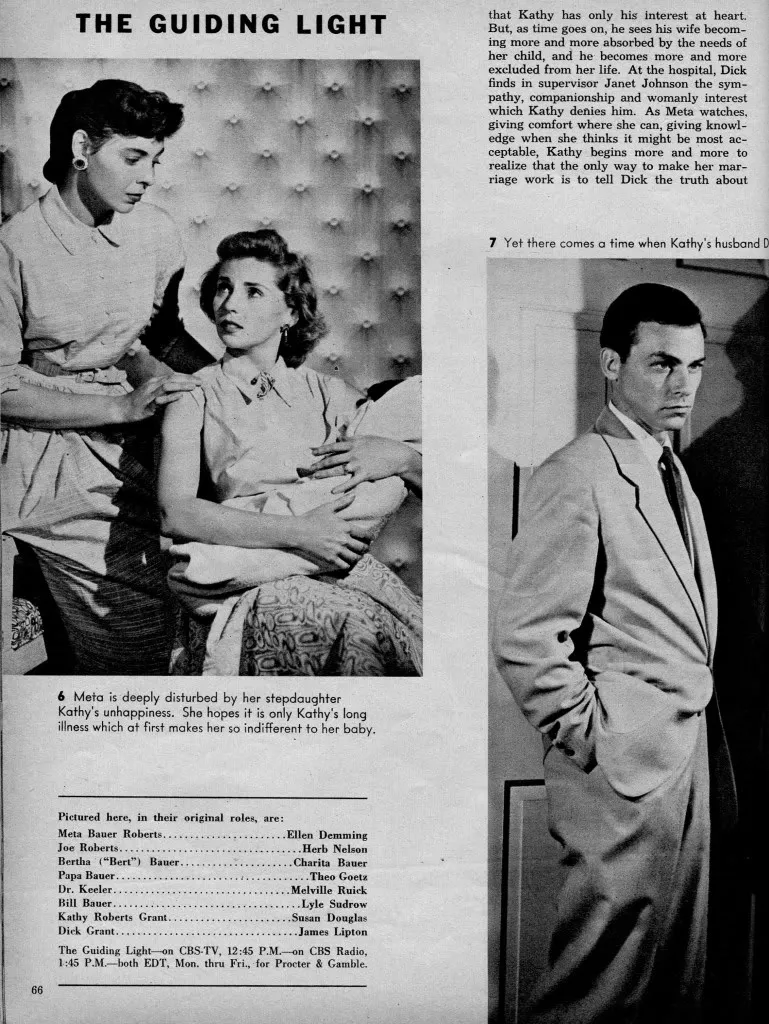
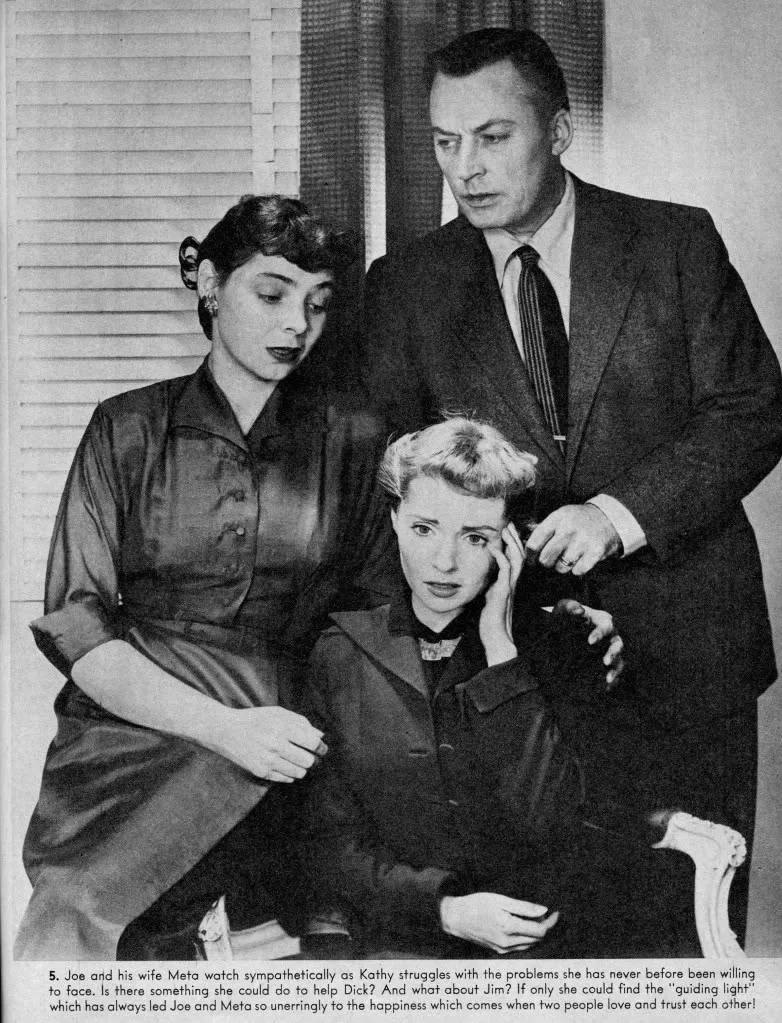
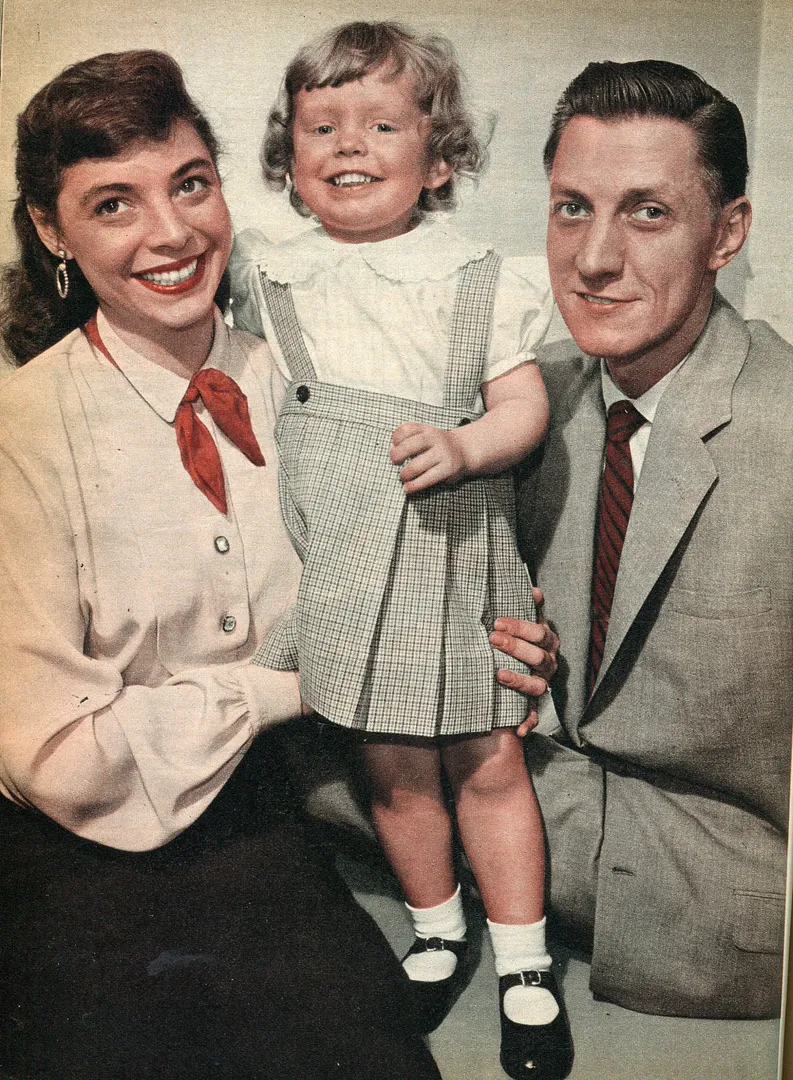
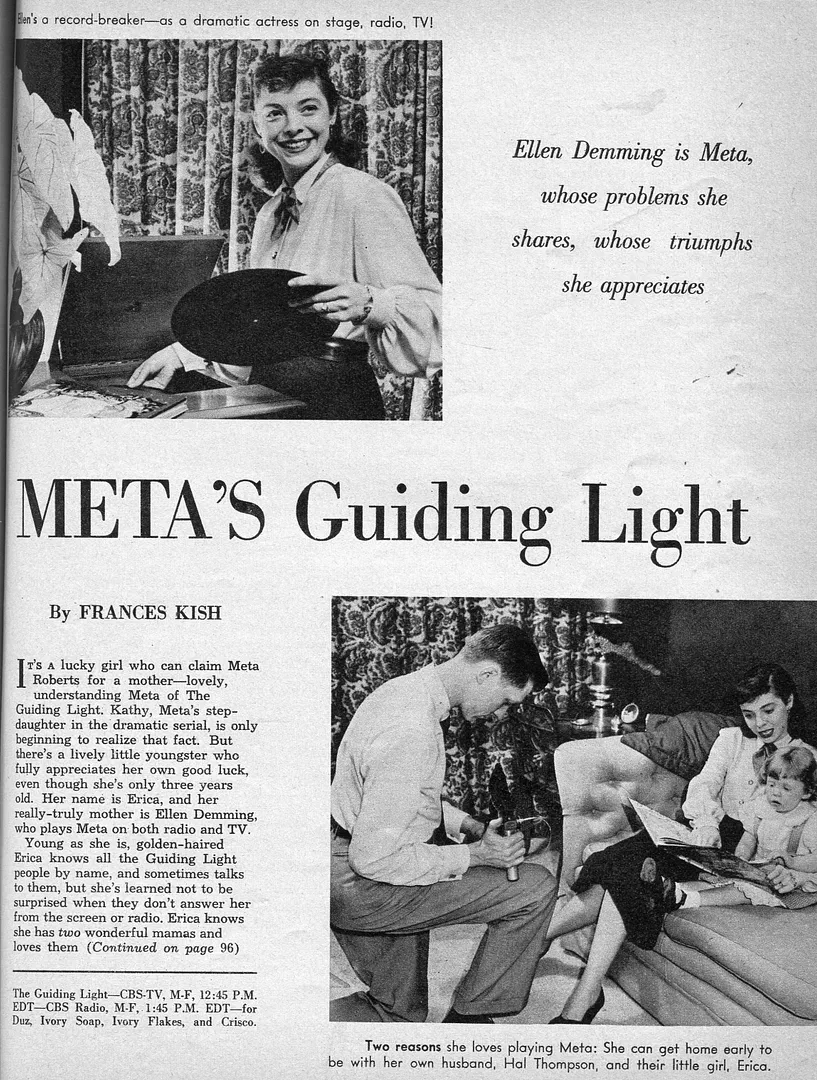
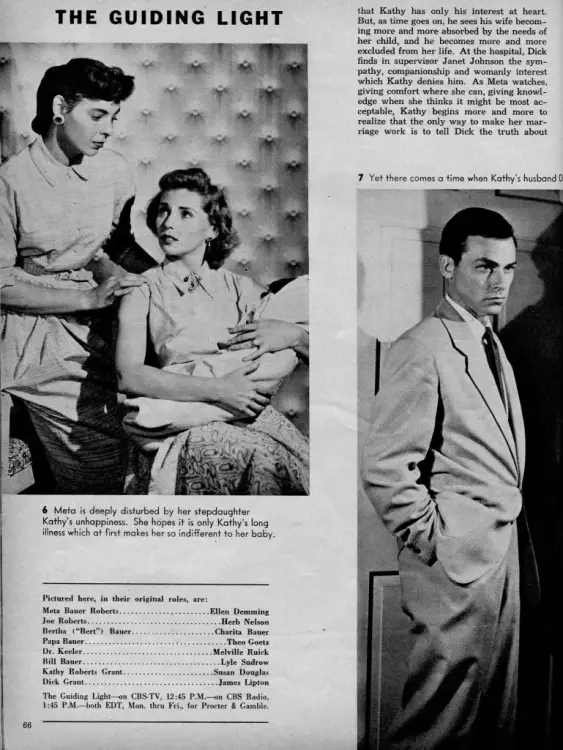
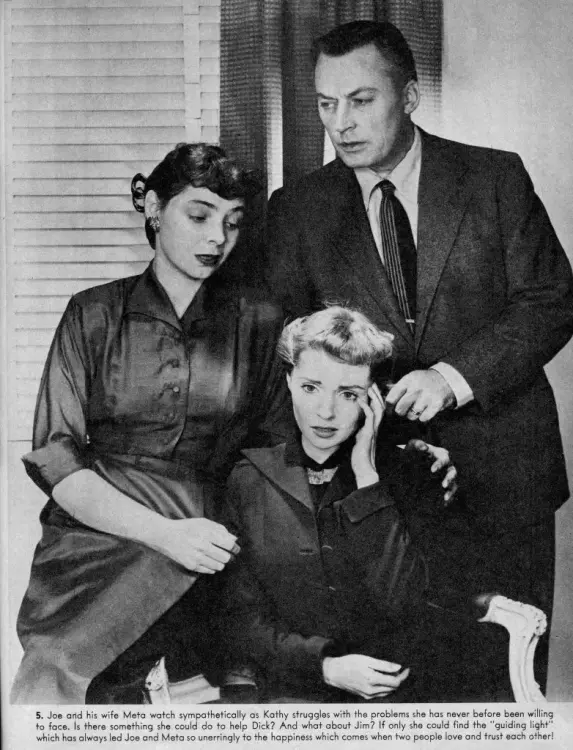
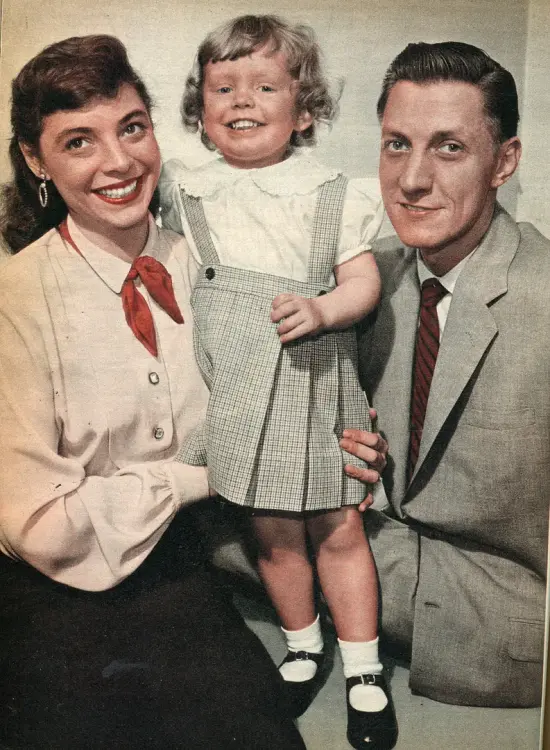
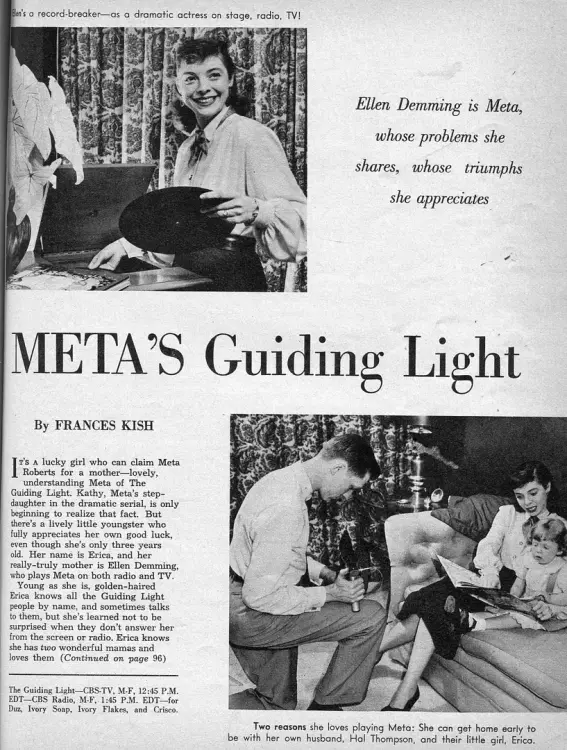
both...the one named Ellen Demming Thompson - Mrs. Hal Thompson - who lives and laughs with her in their own charming home...and the one called Meta Bauer Roberts - Mrs. Joe Roberts - who lives in that big cabinet in the corner of the Thompson living room. Ellen Demming herself feels as if she had lived on a television screen for a good portion of her life, because she was in TV in the early experimental days (on Station WRGB) in Schenectady, New York, the town in which she was born and brought up. Meta Roberts, in The Guiding Light, is the first continuing dramatic role she has ever played. Ellen admires the woman she portrays, grows more interested in her every day. She thinks the cast and all who work with her are tops. "Although most of them were already on the program when I joined it, they never treated me as a newcomer," she says. "They made me one of them, right from the beginning. Ted Corday, the director, was wonderful - kind and patient. What extraordinary patience that man has with everyone! The producer, David Lesan, couldn't be finer to work with. And the cast - well, they're all just swell. That goes for the crew, too. You never saw a nicer set of people." Ellen is a fairly tall girl - five feet seven - with a good figure and a tiny waist. Her brown hair is touched with gold lights, her hazel eyes are set wide apart and have a soft and velvety quality, like her voice. That distinctive, low-pitched voice, now so familiar to listeners, is her natural one, except that the microphone seems to emphasize its throatiness and the soft drawl. Many persons ask her what part of the South she hails from, and they can hardly believe she's an up-state New Yorker and that it's her husband, Hal, who hails from Georgia. Hal was an actor when he and Ellen met, as co-stars in the Green Hills summer theatre at Reading, Pennsylvania. It was Ellen's fourth season of summer stock, most of it on the New England coast, and Hal's first. "Claudia" was the play that brought them together, and they've been very fond of the girl in the title ever since. The year was 1946. Hal had come out of the Army, which he entered from college and in which he served five years. Theatre interested him, and he did some night-club emceeing, then took the acting job as a means of learning what went on behind the scenes of show business. Ellen, of course, had been a professional actress since those early television days. She had gone to Stephens College, in Missouri, to continue her study under the famous actress, Maude Adams, who was then the head of the drama department there. She had served a summer apprenticeship at the Mohawk Drama Festival during Charles Coburn's last season there. And she had a season with the Clare Tree Major Children's Theatre, a touring group of talented young actors which was led by Mrs. Major. "I was twenty the summer I was with Mrs. Major and it was a thrilling year. She made me company manager - which amazed me - and which meant I did a little of everything, from managing the company and acting to hoisting scenery and driving the truck." Both Miss Adams and Mrs. Major had wanted her to change her name from Ellen Weber (she had already dropped her first name, Betty, and was using only her middle name, Ellen). Demming was her great-grandmother's name and both women thought it would look better on a theatre program. Ellen's name on special interest because of something that happened right after Hal met her and began to think seriously of marriage - which seems to have been not later than five minutes after they were introduced! Almost immediately, he began to speak of her a great deal to his family, and his mother asked if Ellen Demming was a stage name or her real one. "I had to admit that I didn't know," Hal says, and he laughs as he remembers his own confusion. "I could only say, 'Well, that's her name, the only one I know.' It had happened so fast to both of us. Ellen assumed I knew all about her, I guess, and I knew that what I already knew was enough to make me know that she was the only girl for me." It had happened fast. In six weeks, Ellen and Hal were formally engaged. Then they begged off for the rest of the stock-company season so they could meet each other's families and plan a wedding in New York, where they were married on September 14, 1946. It was a lovely wedding, and everything went beautifully, except that they had no apartment. It was the time of the most acute housing shortage, and they had to settle for a heatless, cold-water flat in the Hell's Kitchen section of New York City. They shared a bathroom with other tenants. Hal's first birthday present to his bride was a portable canvas bathtub. Fortunately, by the time Erica was born, the Thompsons had settled down in the charming apartment in which they presently live, in one of New York's big garden developments, where there is a playground, and a sandbox for Erica to dig in, a pool for splashing about on hot days, and lots of grass and trees. Perhaps because they waited so long for it, their present home has a rather special feeling of comfortable living, of quiet and of peace. The living-room walls are a soft shade of deep green, restful and cool. Ellen designed the stunning high cabinet and shelves which dominate one wall, and Hal made it to her specifications, with the help of their friend Peter Birch, painting the wood to match the wall. A deep sofa, in gold-colored fabric, faces the television set, on which stands a glazed jardiniere with big white leaves forming a huge bouquet against the background of green wall. There are comfortable chairs and convenient tables. The rugs are beige cotton pile. Lamps and ornaments make color notes here and there. The adjoining dining portion forms an L to the living room and is furnished with dark green wrought-iron table and chairs. Their home is a restful background for two busy grownups and one extremely busy little girl who has to keep up with all her picture books, besides taking care of her extensive family of dolls, and still find time for all her little playmates. Part of Erica's summer is being spent on a side live - and there will be a visit to Ellen's family in Schenectady. "If I didn't have such a fine maid, who loves Erica, I couldn't possibly leave her as I do for rehearsals and broadcasts," Ellen explains, looking serious. "But I do think that it's a good idea for every wife and mother to have some outside interests. I just happened to be an actress who wanted to continue my work, but if I wasn't doing that I would try to find something else which would be stimulating and bring me home to my family with more to give than when I left. It wouldn't have to be paid work. It could be community work, following a hobby, or promoting a cause that does good." Actually, Erica gets little chance to miss her mother, because there are so many hours when they can be together, Ellen's are mid-day programs and she is home quite early. She and Hal have most of their evenings free, except when she does something special, like a dramatic television show at night. She was doing an ingenue role on the Robert Montgomery program when she got her chance to play Meta Roberts - and almost missed it. Jan Miner had recommended Ellen to both the producer and the director of The Guiding Light, but it was generally felt that Ellen felt that Ellen looked too young for the part. "I don't know whether any of the powers-that-be on Guiding Light saw me that Monday night doing an ingenue role on the Montgomery television show, but I hoped they wouldn't. I was supposed to look young and I had worn my hair down, very girlishly. It was the day after that telecast that I was supposed to read for the role of Meta. "What a transformation I tried to make! I slicked my hair up, under my most sophisticated hat, and chose a tailored suit, and did a complete turnabout from the ingenues I'd been playing. I got the part. "Each day I feel closer to Meta. I think that now I look more mature when I'm playing her, because I think of her as an emotionally mature woman, secure in her overcoming of many difficulties. I admire her, knowing that another woman less strong than she might have grown more frivolous and unstable during the period when she was going through such grave ordeals. I have been proud of the poise she has gained, and of her her ability now to help others who are confused and unhappy. Like her step-daughter, Kathy, for instance, for whom she has such tenderness and compassion." How interesting and real Meta is to other women, as well as to Ellen, is frequently demonstrated by incidents like a recent one. Ellen was shopping at her neighborhood grocery and a woman recognized her. "You're Meta," she said. "On Guiding Light." Her face brightened. "It's wonderful to bump into you today of all days, because I had to miss the program and I have wondered what happened." Ellen filled in the day's events, and that led to a discussion of Kathy and her problems. "You know," the woman told Ellen, "I have a mixed-up daughter myself, so much like Kathy, and it helps me greatly to see how you help Kathy. It makes me understand my own child better, and I am really grateful to you." Hal Thompson is apt to smile a little indulgently at the diversity of names by which his wife has been known. He puts it this way: "When the telephone rings, and I answer it, and it's for my wife, I can always tell from exactly which part of her life the caller comes. IF a voice asks for Betty, then I know it's someone from home, or at least from her early days in Schenectady. If someone asks for Ellen, then the call is from the theatre or New York portion of her life. An d if they say, 'Mr. Demming (instead of Mr. Thompson!), may I speak to your wife?' well, then I know it's probably someone from radio or TV." As the husband of Betty Weber - Ellen Demming - Meta Roberts, he's more than satisfied. Erica may have two wonderful mothers. Hal Thompson has three wonderful wives, and he loves them all.
-
August 1953 Radio TV Mirror
-
I was going through the thread to find some of the '50s GL articles I'd posted long ago and given that we are still discussing so much of Marland's run, I thought I'd point out that on page 95 there's a 4-page August 1982 Daytimers interview with Marland and L Virginia Browne. There's also a nice photo at the top of the page of Robert Newman and Jennifer Cooke (looking more animated than she often did on GL), in matching leather. @DeeVee you may like that as it's another reminder of the improvement of the character/actress post-Kelly. There's also a behind the scenes look at the show from March 1977's TV Mirror, on page 53. @alwaysAMC That was a fun interview with Kim. Thanks. And thanks for your recaps. I had totally forgotten that the clone story returned around this point. Johnny Cochran was, I think, maybe trying for some court or legal show around this time? Either way, the OJ heyday was long gone. I don't remember him being too unnatural onscreen. A shame more wasn't done with this Blake and Cassie "sister" bond. Is India ever on the show by this point? For some reason I thought she hadn't vanished yet.
-
January 1953 Radio TV Mirror as when she says, "I don't care about possessions too much. Never think of running around, buying those bits of glass! This comes from my feeling about possessions, from losing everything, so that I think now - collecting? For what?" Susan's name, her real name, is Zuzka Zanta. She stands a doll-sized five feet and three-quarters of an inch in her nylons. She weighs ninety-nine pounds. "But my weight should be nine-five pounds," sighs this animated Dresden figurine. And, tit for tat, Susan always went out with American boys, none but American boys (tall ones, too). She didn't want to marry a European because she'd heard, she says, that American men make better husbands. "Then, boom!" laughed Susan, "I met Jan in Canada - Jan, who is a Czech, both of us half a world away from our native homes - and we fall in love, and marry, and make a home together here in New York City, U.S.A." But this part of the story is part of the love story and comes later on... Susan changed her name because, when she was trying to break into radio and gave her name, Zuzka Zenta, agents and producers cried out, in pain, "Oh, please, no, not another foreigner!" Susan did her pavement-pounding, she explained, during the war, when refugees were a dime a dozen and the hue-and-cry was on to give our American girls the breaks. "So finally, out of desperation," she said, "I chose Susan - which is, by the way, a translation of Zuzka." She picked the Douglas out of a telephone director as, many years ago, the late great David Belasco rechristened another little girl, name of Gladys Smith; the name he picked for Gladys Smith was Mary Pickford. "I had to have something that didn't sound foreign," Susan said. "I wanted something that was pretty usual and all-American. I wanted a plain name and, next to Smith and Jones, which seemed to be going too far, there were more Douglases than any other name in the phone book." As a teenager in Prague, Susan went through the Conservatory. "I had seven years of ballet," she said. " I had music, drama, languages. After the Conservatory, I was in the National Theatre in Prague for a year before the Germans came. Then they closed the theatre. "When I arrived in New York, the people who gave me my affidavit to come here - the affidavit which declared I would not become a public charge - met me. I stayed with them for a little bit. When my mother came, I lived with my mother. "Because I didn't know English, and also because I was told you must have a high-school diploma if you hope for any work in the theatre, I went for one half-year (the last half of the senior year) to George Washington High School. I took courses in English, which was a good way of learning English and of getting, at the same time, a diploma. During this time, Mother went to work as a beauty consultant for Lord & Taylor, so that the bills might be paid. "After I was graduated, I went and worked at Metro-Goldwyn-Mayer's New York offices. I was an assistant to one of the publicity directors in the publicity department. I liked it, too. I like publicity. It was fun to be a part, even an assistant part, of telling people about Elizabeth Taylor, Jane Powell, Gene Kelly, Clark Gable and all the glamorous others. But, Whether I liked it or not, I needed a job, I had to work. By this time, I had caught on to the fact that there is no National Theatre in America, where you can go and work for the rest of your life. And that it is a matter of a job here, a job there, for the one who has the time to seek jobs. This made me realize that I had to save enough money to take time for auditions. "I stayed at MGM a year. During that year, I'd use my lunch hours to see agents. One agent, who was really wonderful to me, was Jane Broder. She took me to see Katharine Cornell in 'Three Sisters.' The two people I most wanted to see in America were Katharine Cornell and Helen Hayes, so this gave me a big, big thrill. I also learned from Jane Broder how difficult the theater is. Not as it is in Europe, she made plain to me - no security. Why didn't I, she asked, try radio? "This was fine with me. I'll act in anything, just so long as I can act. I've done all four mediums now - theatre, movies, radio and television - and in these I've done everything but sing. I can't sing," Susan added ruefully. "Imagine that - and me married to a basso profundo! "But for radio, as for any other medium, I had to have time to get around and meet people and try for auditions. So I lived with a family, helping them take care of their kids, which was mostly a matter of getting them up in the morning and helping them with their homework in the evenings. Since I didn't have to pay any room rent, I saved enough from my salary to live for six months without working, which was the whole purpose... "Once this purpose was accomplished, and the money in the bank, I went to live at the Rehearsal Club on Fifty-third Street - a non-profit organization where you can live (I did) for thirteen dollars a week for room and two meals. "So that's when I started the radio rounds, applying for auditions. I must have taken about sixty auditions, over a period of three or four months, before I got my first job, which was a part in a dramatic educational program called School of the Air. Dick Sanvdille was the director and out of that first job - and thanks to Dick - came my first running part in the serial, Wilderness Road. I played the daughter, who was one of the leads. I was in that for a year - which was really terrific! "But I must tell you a funny story," Susan laughed, "about the first job. When Mr. Sandville interviewed me for the part in School of the AIr, he asked the key question: 'What experience have you had?' I'd answered that one many times before with the honest, one-syllable word, 'None.' And 'Nothing right now, I'm sorry,' was the answer I got in return. So, this time, what with the passing months eating away at my savings, I told a real whopper. 'Well, I worked for two years in Scranton, Pennsylvania,' I said. (Why Scranton, I will never know - I had never, so help me, heard anything about the place!) "But Mr. Sandville appeared to accept the story and I got the job. "The first day in the studio, he told me during a scene, 'Now you fade.' I hadn't an idea what he meant. 'Fade.' What was that? In another scene, a short while later 'This time,' said Mr. Sandville, 'you cross-fade.' I didn't know what that meant, either. "When the rehearsal was over, Mr. Sandville said, looking me straight in the eye: 'Even in Scranton, they know what a fade and a cross-fade is.' And I knew that Mr. Sandville knew I had never before seen the inside of a radio studio, either in Scranton or any other place! "But from then on, I worked pretty steadily...a new thing, a new job, always seemed to come out of the job before. Out of the three or four shows I did for Theatre Guild on the Air came my first Broadway play, 'Prologue to Glory,' in which I played Ann Rutledge. And out of 'Prologue to Glory' came an offer from the Theatre Guild to play the part of Consuelo, the girl lead, in 'He Who Gets Slapped.' I then did a couple more plays and a couple of movies in Hollywood, 'The Private Lives of Bel Ami,' 'Lost Boundaries.' And then I did a movie in Canada called 'Forbidden Journey.'" As she spoke of the movie in Canada called "Forbidden Journey," the color of Susan's eyes changed, deepened, for it was during the making of "Forbidden Journey" Susan met her love. "We were doing the picture in Montreal," Susan said, "and were looking for someone to play the part of a Czech stowaway. Jan, whose full name is Jan Rubes (pronounced Rubesh), had just got over from Czechoslovakia - he left soon after the Communists came in. And someone who knew about the film, and had met Jan, suggested to him that he try for the part. He did. He was given a test and he got the part. So there we were, playing the leads, and Jan - a Czech, who spoke almost no English - practically playing himself! "The first scene we played together having barely and briefly been introduced was - the love scene! With which we had so much difficulty that we had to do it thirty-eight times! It was a jinx - sort of a lovely jinx," Susan smiled and sighed, "for, halfway through each take, something happened, either to the camera, or the birds made too much noise, or a plane zoomed overhead, or we forgot our lines, for which the 'penalty' was - Jan and I going into the clinch time after time after time up to the count of, as I've said, thirty-eight! "Yes, it was 'at first sight' with both of us, I guess. But speaking for myself, no guesswork about it - and why not? He's six-foot-one," Susan said, eyes blue now, and shining, "he weights 195 pounds. He has light brown hair and gray-green eyes and, as a singer, he's a basso profundo, the rich volume of which shatters your heart - and mine! "Originally, Jan wanted to be a doctor - as I, originally, wanted and hoped to be a ballet dancer - but when the Germans came to Prague they closed the University, so he couldn't continue with his studies. Music was his next love, so he went to audition at the Conservatory of Music in Prague and won the scholarship over 280 applicants. After he finished at the Conservatory, he was engaged as bass baritone at the Prague Opera House. He was the youngest bass baritone at the Opera House, the youngest that had been three for twenty years. "The only thing Jan likes better than singing is his sports. He is a big sportsman. In Czechoslovakia, he was cross-country ski champion and on the Junior National tennis team. We ski together now, every winter, Jan and I. The only dance we like to dance is the waltz - to the strains of 'Tales from the Vienna Woods.' - and the polka, to a Czech polka we both remember from back home...We can't play tennis together - it would be too ridiculous of me - but now we've started a new hobby, playing golf, which we can do together. "All this, and more, I learned about him, as he learned my life from me, between takes on the picture and at dinner in our hotel on the picture and at dinner in our hotel after work at night. It was one morning, toward the end of the picture, while we were waiting for the down elevator, that he proposed to me. In English, as a matter of fact! I said 'Yes' right away. "After the picture was finished, we saw each other every weekend in Montreal - for I flew up there to see him until such time as he could be admitted to the States. Practically a year form the day we met, we married. "The Czech custom is, when you get married, you break a plate and keep the pieces, which are lucky pieces. For my marriage present, Jan gave me a bracelet of gold and pearls. And, after the marriage, he had a bit of the broken plate put in a gold link as a charm for the bracelet. For my first wedding anniversary gift, he gave me the Roman funeral I, made out of pearls and gold. For my second, which he gave me the Roman numeral II, also made of gold and pearls - which are my favorites of all jewels. I am not crazy about jewelry," Susan said, "except for the gold and the pearls - and Jan's imagination has gone into them." Thanks to CBS Radio and TV's Guiding Light, and Susan's lead role thereon, no honeymoon was possible for Susan and Jan, at the proper time for a honeymoon. But last year they flew to Havana, which was a honeymoon (even though a belated honeymoon) heaven. "My husband went there," Susan said, "to sing 'Il Trovatore' and 'The Marriage of Figaro.' As, at another time, he went to New Orleans for 'Don Giovanni.' In addition to opera, Jan does concert and has made some TV appearances. He is now on a cross-country concert tour all through Canada. I flew to Canada - on a four-day leave of absence from Guiding Light - to be with him at the start. But back to Havana, beautiful Havana...in Havana, apart from the work Jan did, we danced in the moonlight, swam in the moonlight, did everything romantic honeymooners are supposed to do." Now in New York, these two - who met, as if by inscrutable design, half a world away from their native home - make their home, In an apartment which Susan describes as "very small and not too interesting...except for the furniture, most of which Jan built." As a housewife, Susan doesn't, she said modestly, think too much of herself. "I'm not neat around the house," she sighed, "only in the kitchen. You could eat off the floor of my kitchen. And I can't stand an unmade bed or unwashed dishes. Always have to have the bed made five minutes after I step out of it, and always have to do the dishes right quick! But otherwise...I don't care about possessions or taking care of them too much.... "I do enjoy cooking, love to cook, love to experiment with things. One of my favorite recipes is a graham-cracker-crust pie filled with a layer of lemon chiffon, then sliced bananas, then a layer of strawberry chiffon, another layer of sliced bananas, the whole topped with whipped cream and sliced strawberries." When young Susan and Jan are not cooking, painting, performing in radio, on TV, on the concert stage, in movies or in opera, they have any number of hobbies to keep them happy. They take a lot of eight-millimeter pictures of each other and the places they go, Susan says, then cut their own film, edit it and caption it. They play games. Charades, for instance. "And a wonderful new word game," Susan said, a glint in her eye, "called Scrabble. And we love cards - bridge, poker, canasta and gin. Jan loves to play chess, but I haven't the patience. "I can't sew, but I used to love to sculpt. And I fool around some, even now, with pottery. "We hate parties, big parties. If we have more than eight people for dinner at one time, my husband doesn't have a good time. We go to the theatre a lot, and to the ballet, and we go dancing, as I've said, usually to the St. Regis Roof. "I'm not much of a one for new clothes. I can't, just can't stand shopping. I just loathe it. When girl friends call up and say, provocatively 'Let's have lunch and go shopping,' nothing could excite me less or bore me more. I never go. About once a year, propelled by necessity, I hurl myself into a shop, say, 'I'll take this, and this, and that - goodbye!" "Except for evening clothes," Susan said. (With Susan, who is as feminine as filigree, there is usually an "except.") " I love evening clothes because of the big, voluminous skirts - it's the romantic in me, I guess - and also because, with evening clothes, I can wear platform shoes! "But if I had my way - my ideal way of life - I'd live in the country in sweaters, slacks and skirts. "The minute we have enough money, I'd like to have a farm in the country - especially because I'm mad for fireplaces...we listen to music so much, to sit by a fireplace and listen would be lovely...and mad for dogs. And horses. In Czechoslovakia, we had a town house in Prague and a farm outside of Prague where my dad used to breed horses. I rode side-saddle. "At home, we had dogs, too, lots of them. We had five police dogs, one Irish setter and one cocker spaniel. When I have a dog again, I'd like to have a police dog, or a St. Bernard - only they eat so much... "Our immediate plan is to stay in New York and work for another five years, during which time we hope to have two children, one right after another, as fast as we can. Then to the country, where - instead of working every day - we'll do a TV show once a week, a movie, a play, a concert once or twice a year. "How we make out financially will determine, of course, whether this dream comes true, or not...If it doesn't," Susan shrugged, "life with Jan and with the two one-right-after-another children we hope to have will still be, for me - in town or in country, with or without a fireplace and a dog -the ideal way of life." The years have been good to Susan, for indeed she has found love's guiding light.
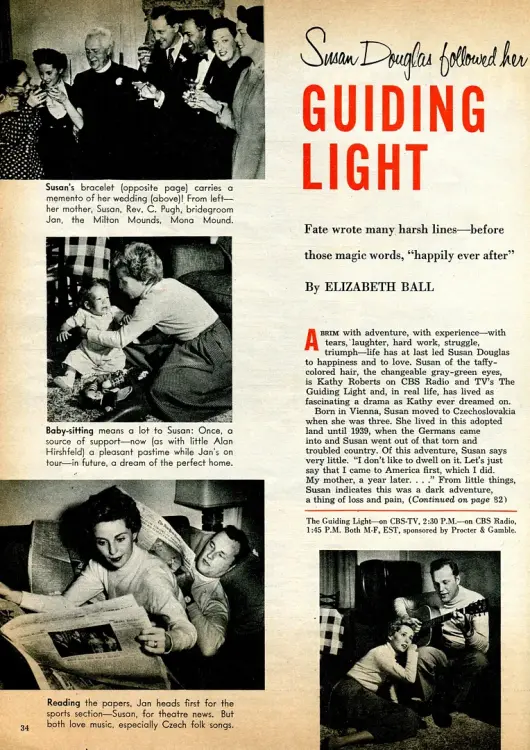
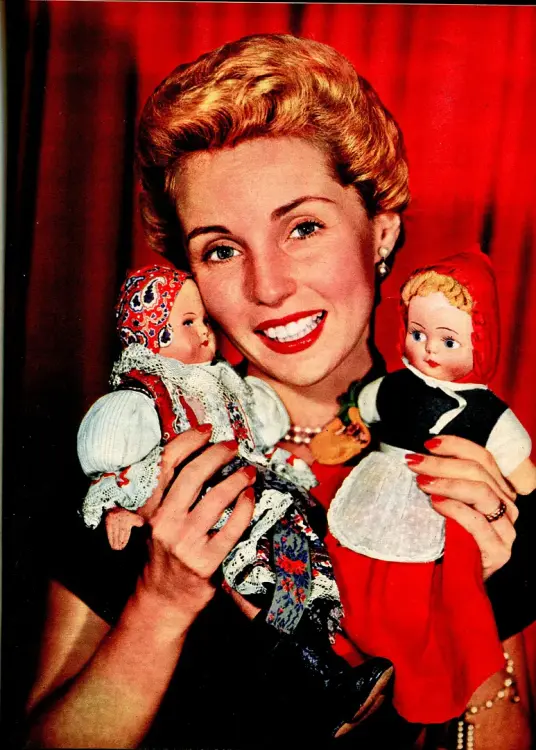
-
Radio TV Mirror April 1954 Susan is not only heard but seen in The Guiding Light - in the exacting role of Kathy Grant, who already has a baby and just couldn't, under present circumstances, be expecting another. Jan is a rising singer, with a split-second schedule of operas, concerts and recording dates. And Jan has to make weekly trips to Canada for his radio show, Songs Of My People - the most popular show in all Canada. That they are facing the problems, making the adjustments, is only a footnote to the fulfillment of their dreams. The coming baby - expected in May - is really their second miracle. The first was that Susan and Jan ever met at all. "We had to cross an ocean just to get introduced," says Jan. But behind that simple statement is a world of paradox, of exciting personal history. For both Susan and Jan were born in Czechoslovakia, both studied at the Conservatory and worked in the National Theatre in Prague. But each followed an individual career, and each made a separate escape to the New World - Susan arriving in the United States with her mother, in 1941, and Jan reaching Canada on New Year's Eve of 1950. The meeting of Jan and Susan came about in Toronto in 1950. Susan was there to make the movie, "Forbidden Journey." The man chosen to play a Czech stowaway was Jan Rubes - who had just arrived from Czechoslovakia. Jan and Susan were introduced and immediately called up to play a love scene. They clinched and kissed thirty-eight times before the director was satisfied. Neither Jan nor Susan minded. "Considering our battered lips," Jan notes, "you might say it was love at first bite." A few months later, on the occasion of the picture's world premiere in Toronto, they were married. And they talked about having a baby. "It's something you shouldn't have to talk about," Jan says. "Children come naturally to a happy marriage. But we were separated by hundreds of miles most of the time, and most of our conversations were carried on by telephone. Unfortunately, you can't have a baby by telephone." While Susan had taken out her citizenship papers, Jan could get into the States only on a transit visa for a few days at a time. Susan's career kept her in New York. Jan's kept him in Toronto. "In our first few years of marriage," Susan computes, " I don't think we got to spend more than a year together, adding up the hurried weekends." Most of their friends - the Leo Durochers, the Jack Palances, the Ivan Romanoffs, the Dr. Leonard Hirschfields - had children. Jan and Susan's affinity for kids was obvious. Susan had made children's records and always magnetized youngsters with her stories. Jan sang songs to them and explained games for them. Last May, the second miracle began. Jan was admitted to the States and took out his first papers. The obstacles were being cleared away, one by one. Now there could be more time together, more talk of the future - and not just by telephone. For Jan, there were no doubts. Jan has a wholly cheerful, optimistic nature. Susan can be skeptical, however. "So in September I had a cold," Susan remembers. "That was followed by nausea. 'Virus!' I said." "No," said Jan. "Morning sickness." "But I have it all day," Susan insisted. "It's a virus." "You're pregnant." Susan went to her doctor. "Virus?" The doctor shook his head. "You're going to have a baby." Jan was a very happy man that evening. He wanted to celebrate and take Susan out to dinner, but her "virus" was bothering her. They had a toast with orange juice, then phoned Susan's mother, who lives in Honesdale, Pennsylvania. She was ecstatic. She wanted to come right over to New York. "Later," Susan said, "There'll be plenty of time to help." Jan wrote his mother overseas and she wrote back that Susan should remember that she must now eat enough for two. "Ha! She should only know," Susan says. "I'm always hungry. An hour after dinner, I'm ready for a sandwich. At the studio, they all take their cookies and sandwiches over to a corner where I can't beg a bite." But, when it came to telling people outside the immediately family, Susan hesitated. That's when Jan said she might keep it quiet, but he was about to burst. They agreed that Jan would "burst" in Canada, but they would hold back the news in New York. But, after a few weeks, it was too much for Susan and she told her friends on The Guiding Light. Nearly all of them have children of their own and they were delighted. "Oh, they've been so good," Susan says. "Much too good." They worry about her standing too long or climbing stairs. And the advice flows like water. One tells her, "You must be very careful." Another advises, "Do anything you want and eat anything you want." Jan and Susan make no bones of their hope that the first-born will be a boy. "I want a boy, girl, boy in that order," Susan says. "That means the girl will have plenty of boy friends. Besides, everyone wants at least one boy and, if you get that out of the way with the first, then you are psychologically free." But they can't get together on names. "If it is a girl," Jan says, "how about Jeannette?" Susan wrinkles her nose. "No. But, if it's a boy, how about Christopher?" "As a musician I must say no," Jan answers. "Christopher Rubes doesn't sound right. Too many r's." Their neighbors and friends, the Jack Palances, hope that they will have a girl: "We have two girls and we don't want you to have a boy before we do." A letter came from Laraine Day, Leo Durocher's wife. "I hope it's a boy and he's a pitcher." So, suddenly, Jan and Susan find themselves in a discussion as to what their first child, boy or girl, as yet unborn, will grow up to be. "Definitely not an actor or singer," Susan says. "He's going to be a doctor so he can live in Denver if he likes." "Suzie has a Denver fixation," Jan says. "Denver is in the mountains and has nice people and good cultural interests," Susan says, "and I can't live there. If a boy's a doctor, he can live anywhere. If he's an actor, he has to stay in New York." Susan feels that children should be raised in the country, preferably on a farm. When they first talked about children, they talked about moving from their Manhattan apartment. "But we've changed our minds," Susan says, and explains, "I began to realize it would mean a lot of time wasted commuting into the city - time that I would otherwise be able to spend with our child." They have a promise of a two-bedroom apartment in the same building, to be made available a couple of months before the baby is due. For that reason, they have put off buying baby things. "Actually, we hope to make a lot of things ourselves," Susan says. "I couldn't darn a sock - but now I'm going to sewing classes." She plans to make drapes for the baby's room and then try more complicated things. Jan, whose talent with tools has already produced bookcases and a phonograph console, is going to build an old-fashioned crib with rockers. Being pregnant hasn't changed Susan's life much. And this, at times, has disturbed Jan. "Suzie is a powerhouse. It's nothing for her to do two shows during the day, come home and make dinner for a party of six and then go on a theatre with them. Now, I think it's important that one doesn't overdo it." Susan loves to tell how sweet Jane was in those first two months, when she was uncomfortable. Jan, who dislikes cooking, nevertheless prepared simple dishes for breakfast and dinner. "Jan is as wonderful as his potato pancakes," she says. "He has the best disposition. He is always cheerful. He sees good in everyone and everything. He can go out in the worst kind of weather and come back smiling." Susan and Jan agree that they are cut of different cloth. Jan has patience and is easygoing. Susan is a woman of tremendous drive and will power. So they hope the baby will have a bit of both their personalities. And they are grateful that the baby will be born an American citizen. Both know what it is like to be a "man without a country." "I had to wait five years to become a citizen," Susan says. "Jan must wait three. And the baby doesn't wait at all!" "He'll be a citizen before I am," Jan notes. Susan has no intention of giving up her career. She will likely take a leave of absence from The Guiding Light sometime in April and be back on the air in July. "You see, the show takes only three or four half-days a week," she says. "It is easy for an actress to combine a career with family responsibilities, once her babies are born. And if I should get another Broadway part, there, too. I would be working at night and still have my days free." Geographically speaking, Susan still doesn't have Jan all of the time. Last summer, he made his debut in New York and got wonderful reviews from music critics. But he has built a tremendous following in Canada and continues to do his weekly show there. In addition, he is under contract to do a number of operas and he is recording for Decca. "Both Jane and I have had crowded lives," Susan says. "It is almost as if I'd had many different lives. As a child in Europe, my family was wealthy and I was spoiled. Then there was the war and being uprooted and the poverty. There was the starting all over again in the States, and I have been very lucky. With the baby, it will be the beginning of another kind of life. "And an even better one," Jan concludes.

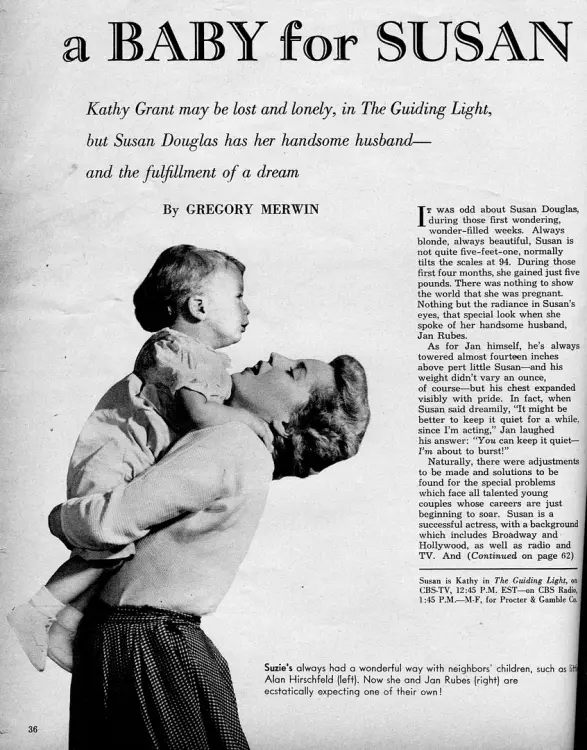
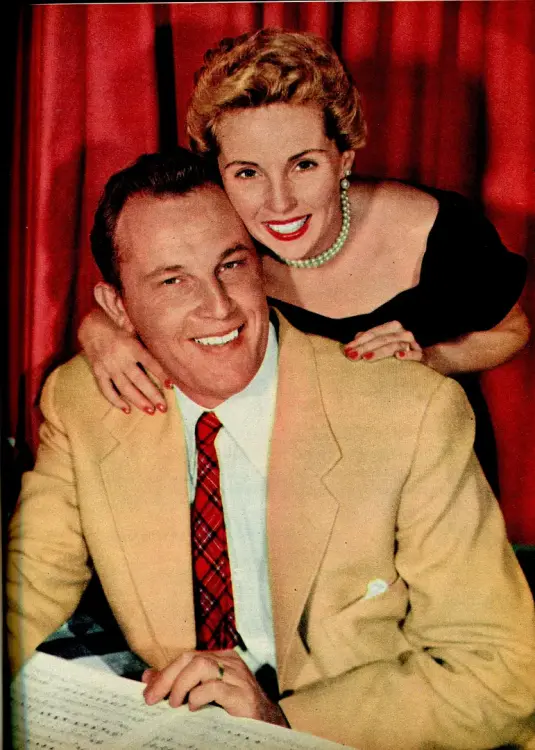
-
Thanks @Reverend Ruthledge If 1957 is the transition year, 1958 cements it. The surviving episode where Kathy deals with her paralysis is moving, but reading about it is less empowering and more based on fear...and it almost seems like the narrative punishes her for making a fear-based choice. I wish I could see the moment where Mark realizes she had completed the Tree of Life cross-stitch. Sounds very moving. In Irna's last year as headwriter, I'm glad she brought in the conflict with Trudy one more time, along with acknowledging that her wanting to be Robin's mother was down to losing Chuckie. I wonder if Nixon carries any of this over. Once Meta loses these building blocks it was easier to phase her out of the show. I guess this must be the end or close with Trudy - I still think there was more left for her and Clyde, or just her, but sadly I don't have a time machine to beg for a job on the 1958 writing staff... Was Trudy short for Gertrude? I can't remember. Paul, Paul, Paul, Paul, Paul. He's everywhere, but the show did need fresh blood. With the few mentions of Dick I'm surprised he still has several years to go. Speaking of Dick, I wish his mother could have been around to meet Anne's father. A positive of these small casts is everyone celebrating Christmas together on one set for one episode. Another reason I wish we had more 15-minute soaps.
-
Thanks @slick jones for the Joe update and for all the other great updates. One of the most fascinating parts of the updates is what wild or random credits you find with people who have small roles on soaps. On this page alone we have an X-Factor Arabia host and someone who was in a project called Blazed and Loaded.
-
I see that Tams went on to co-create that Australian K9 series with Bob Baker. I remember watching some of that at the time but not a great deal. I'm still surprised it happened.
-
I could see this, yes, although Paige also had NYPD Blue.
-
Thanks so much @Vee I hadn't heard about this article. A great look behind the scenes for such a murky period. I still don't think the Evelyn Marsh was a nadir of the season. I am in the minority but the Civil War story and the story with Robyn Lively (not her fault) as they both had that early '90s "quirkiness" which felt less at home with Twin Peaks and more with something like a David Kelley show. Learning the very thin reason for the former story makes me dislike it even more. I wasn't a big fan of the Nadine story either, but the relationship with Mike made it more interesting - and Wendy Robie was always worth watching. I also don't agree it was OOC for James to be obsessed with Evelyn. Being a "Bookhouse Boy" doesn't change that as they all liked to play hero to women in trouble. Fenn so bluntly disliking that pairing due to Billy Zane being so fresh amused me (I didn't think it worked onscreen either), and she was right about Audrey not being in that beauty pageant. I'd wondered if Lynch was the reason Bobby circled back to Shelley, but no mention of that here. I don't think ABC was wrong that viewers would not want to keep waiting to see Laura's killer. I don't think the show could be sustained with that secret. The show was, realistically, never going to maintain the public even if they'd done everything right, but I think they would have maintained more of them if so much hadn't gone wrong in the back half. The more time passes the more we see just how crippling the absences of Frost and Lynch were. Story ideas being based on "I liked comics" or, "I saw it on TV," kind of say it all.